
When Casual & Fine Dining Restaurant Groups Decision-Makers Need Strategic Presentations Addressing Business Outcomes
Casual & Fine Dining Restaurant Groups Presentation Design is the specialized discipline of structuring complex hospitality metrics, unit economics, and operational growth strategies into highly visual, decision-ready slides for executive stakeholders.
Presentation Gurus serves as the dedicated presentation design agency for Casual & Fine Dining Restaurant Groups executive teams. We convert complex restaurant operations data into structured, decision-ready visuals. Whether your team needs an executive board deck to pitch franchise development concepts, an operational standard pitch deck, or a franchise growth presentation, our strategists build custom structures tailored to hospitality leadership. We support your full lifecycle of collateral, designing clear PowerPoint visuals, Keynote decks, and Google Slides assets that streamline capital calls and store-level rollouts.
Why Casual & Fine Dining Restaurant Groups Presentations Need Professional Presentation Design
Casual & Fine Dining Restaurant Groups face operational complexity when communicating strategy across corporate boards, franchise operators, and store leaders. Standard presentations rely on generic visual templates that fail to convey labor model nuances, prime cost adjustments, or same-store sales trajectories. When executive teams present complex portfolio shifts using off-the-shelf layouts, key financial drivers get lost in visual noise. Strategy-led presentation design solves this problem by structuring data around specific hospitality business goals. By organizing menu engineering metrics, guest acquisition numbers, and unit expansion economics into clean visual frameworks, critical performance indicators become instantly clear. This addresses decision-maker fatigue and aligns executive leadership, regional managers, and private equity sponsors around actionable growth plans.
How Working With Us Works
From First Conversation To Finished Deck
Company
Meet JR, our founder. Fortune 500s, SMBs, startups — he’s built presentations for all of them with his team for the past 30 years, and he’s ready to build yours.
Service
Find your fit. We match the right service and scope to your audience, your goals, and your deadline, from 24-hour service to a 15-day turnaround.
Cost
Know the number upfront. Transparent, flat pricing before we start — no surprises, no hidden hours. All from $49 per slide.
Get Started
Tell us about your presentation project. It will take two minutes and we’ll get back to you on our next business day.















12 Essential Presentation Types for Casual & Fine Dining Restaurant Groups
Hospitality Groups Investor Pitch-Deck
Primary Audience: Private Equity Investors and High-Net-Worth Partners.
Purpose: Secure expansion equity and real estate credit lines.
Description: This presentation deck outlines financial performance, average unit volume, and payback periods across existing locations. The narrative focuses on market growth potential and unit-level EBITDA margins. Visual layouts emphasize predictable ROI models for multi-unit rollouts.
Multi-Unit Restaurant Operators Board PowerPoint
Primary Audience: Board of Directors and Executive Committee Members.
Purpose: Report quarterly revenue performance and operational margins.
Description: This Slide-Deck presents consolidated financial updates, prime cost fluctuations, and labor productivity metrics. Strategic slides highlight concept profitability and year-over-year same-store sales comparisons. The structure ensures corporate board members focus directly on key levers.
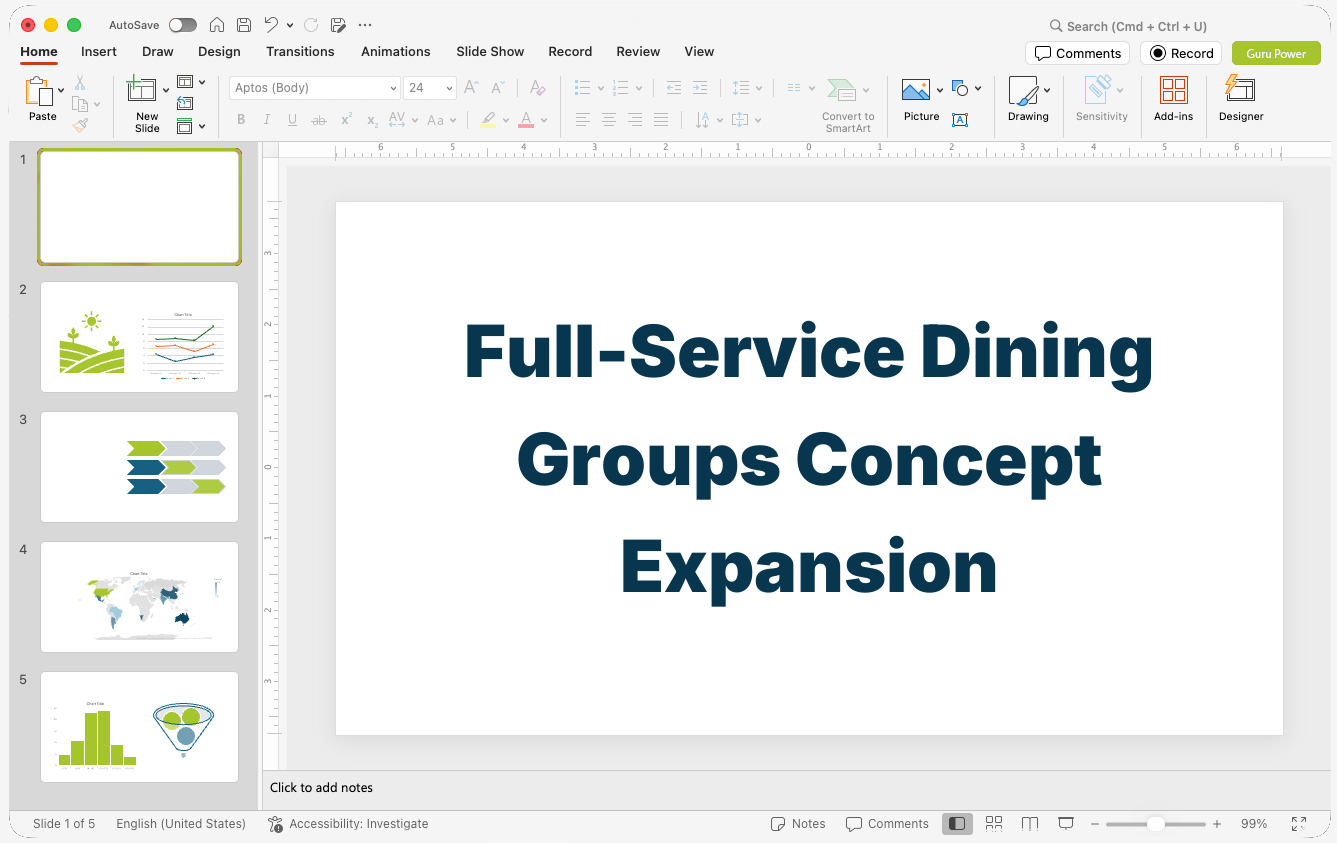
Full-Service Dining Groups Concept Expansion Presentation
Primary Audience: Real Estate Developers and Commercial Brokers.
Purpose: Win prime lease sites in high-traffic retail developments.
Description: This presentation illustrates site selection criteria, guest demographics, and spatial footprint requirements. High-resolution design layouts highlight architectural renderings, dining room layouts, and footprint flexibility. Developers gain clear visibility into the group's foot traffic generation.
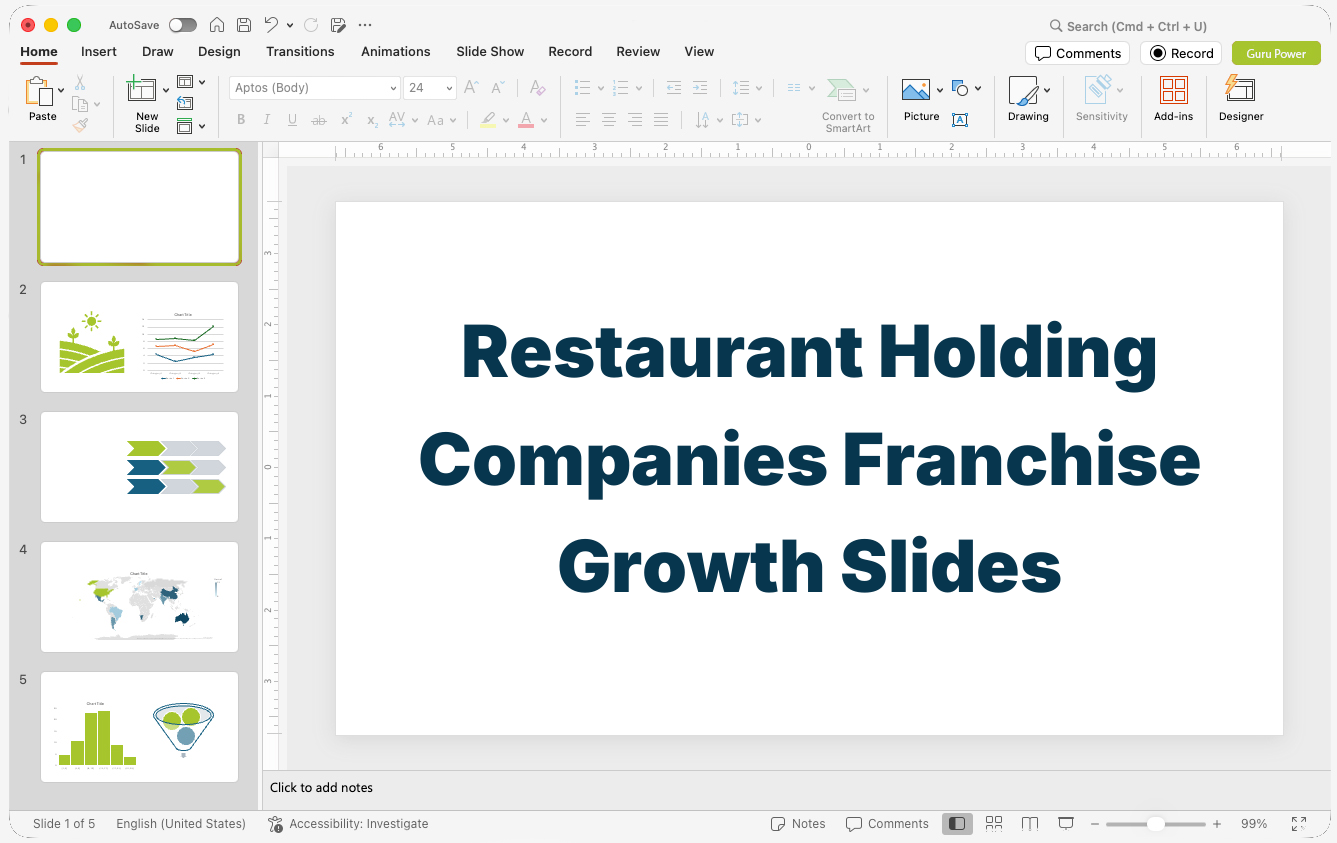
Restaurant Holding Companies Franchise Growth Slides
Primary Audience: Prospective Franchise Owners and Area Developers.
Purpose: Sell multi-unit franchise development territories.
Description: This Slide-Deck highlights brand equity, supply chain advantages, and turn-key operational support. Clean visuals outline store launch milestones, territory rights, and ongoing royalty structures. Prospective franchise operators receive a clear road map to unit profitability.
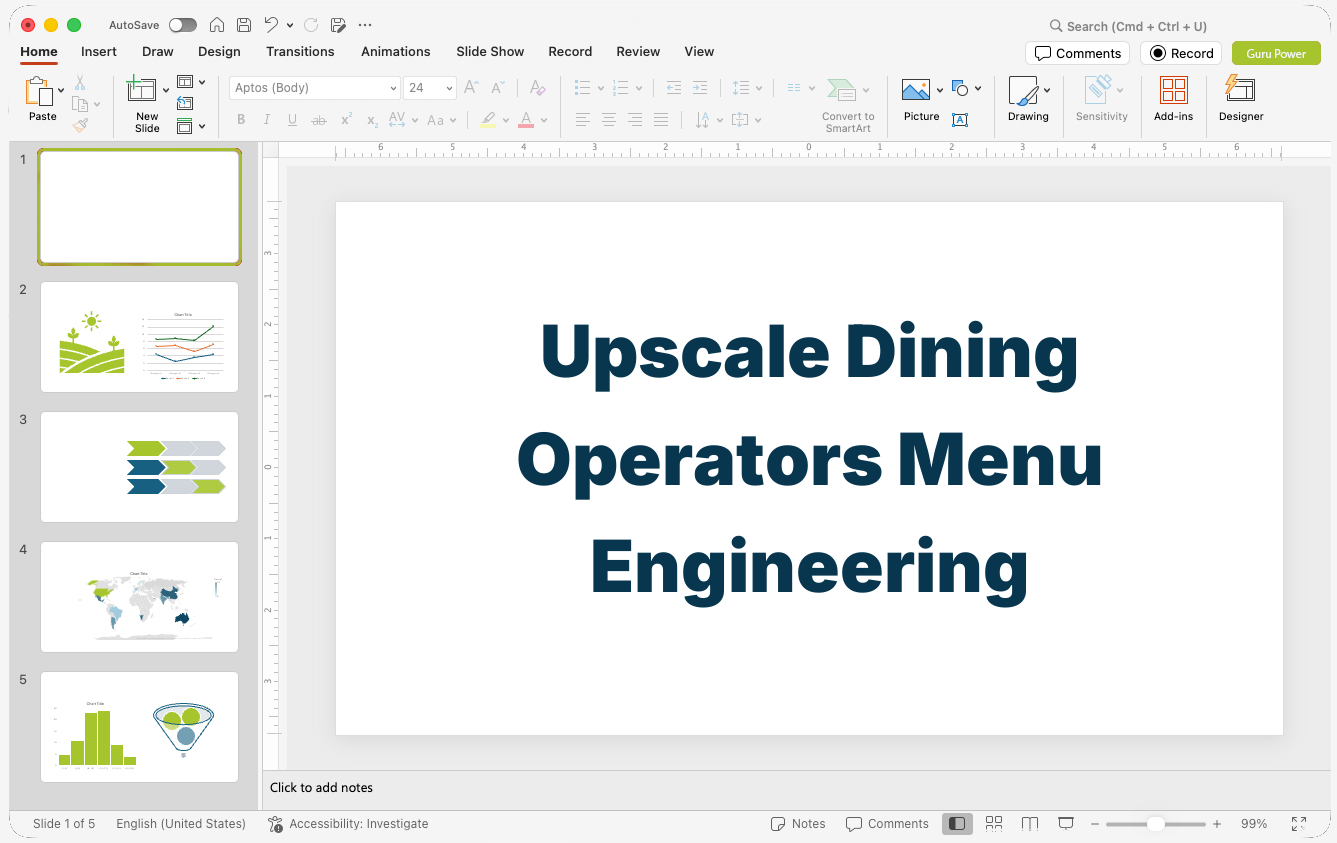
Upscale Dining Operators Menu Engineering Presentation
Primary Audience: Executive Chefs, Culinary Directors, and Financial Controllers.
Purpose: Optimize menu pricing and contribution margin percentages.
Description: This strategic PowerPoint presentation maps dish popularity against profit margins using quadrant analysis. Visual structures clearly separate high-cost menu items from volume drivers. Culinary teams use these slides to make data-backed adjustments to food cost targets.
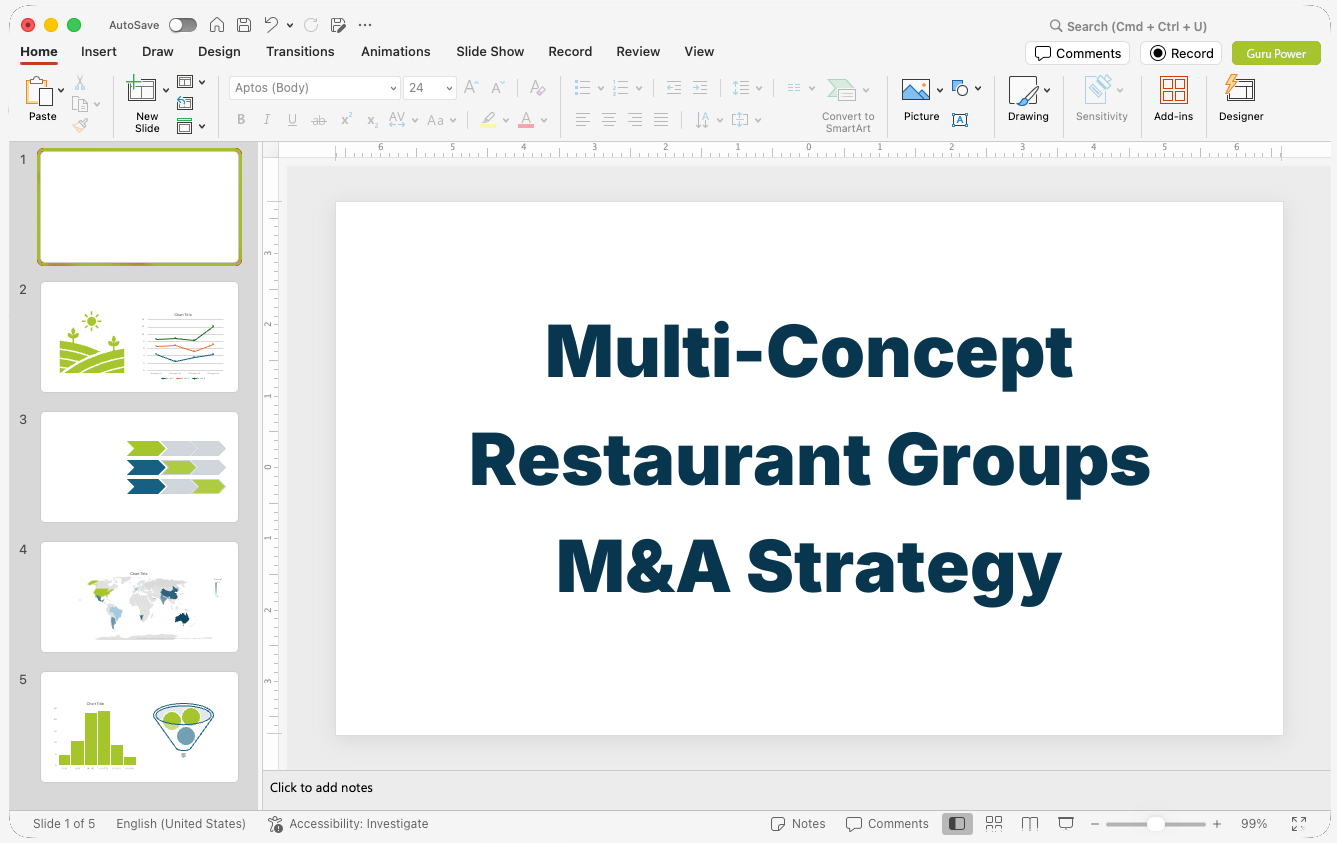
Multi-Concept Restaurant Groups M&A Strategy Pitch-Deck
Primary Audience: Investment Bankers and Target Restaurant Founders.
Purpose: Pitch acquisition terms to independent restaurant brand founders.
Description: This strategic Pitch-Deck highlights shared service synergies, procurement savings, and corporate backend integration. The narrative demonstrates how joining the parent group enhances purchasing power while preserving culinary identity. Graphs detail projected overhead reduction post-transaction.
Hospitality Groups Operational Standards Slides
Primary Audience: General Managers and Regional District Directors.
Purpose: Standardize service protocols and labor targets across stores.
Description: This operational Slide-Deck details standard operating procedures, table turnaround targets, and guest satisfaction benchmarks. Visual diagrams illustrate line-check processes and floor management expectations. Regional directors utilize these slides to align front-of-house and back-of-house leadership.
Multi-Unit Restaurant Operators Technology Integration Presentation
Primary Audience: Chief Technology Officers and Franchise Advisory Councils.
Purpose: Approve rollouts of new POS, KDS, or loyalty tech stacks.
Description: This strategic presentation breaks down software integration timelines, vendor costs, and projected speed-of-service gains. Data visual slides display pilot test results across select locations. Decision-makers evaluate tech architecture compatibility and store-level training schedules.
Full-Service Dining Groups Labor Model PowerPoint
Primary Audience: Store Managers and Operations Vice Presidents.
Purpose: Reduce overtime costs and optimize shift scheduling templates.
Description: This executive PowerPoint analyzes labor hours against hourly customer traffic patterns. Visual charts map tip-pool structures, management ratios, and kitchen prep scheduling efficiency. Operations leaders rely on these slides to enforce wage cost caps across all regions.
Restaurant Holding Companies Supply Chain Strategy Slides
Primary Audience: Broadline Distributors and Procurement Officers.
Purpose: Renegotiate vendor contracts and lock in volume rebates.
Description: This operational Slide-Deck projects aggregate ingredient demand across all operating concepts over a multi-year timeline. Structured tables highlight freight routing, storage constraints, and regional distributor performance. Procurement teams use these visuals to drive margin gains.
Upscale Dining Operators Guest Experience Presentation
Primary Audience: Hospitality Staff and General Management Teams.
Purpose: Elevate service execution and increase average check size.
Description: This strategic presentation details guest journey mapping, sommelier upsell guidelines, and private dining booking procedures. Visual frameworks demonstrate how service steps correlate with customer loyalty metrics. Management teams use the deck to run consistent pre-shift training sessions.
Multi-Concept Restaurant Groups Marketing Strategy Pitch-Deck
Primary Audience: Corporate Marketing Teams and Regional Field Marketers.
Purpose: Align localized promotional campaigns with central brand goals.
Description: This marketing Pitch-Deck reviews customer acquisition costs, digital loyalty adoption, and localized promotional ROI. Slides showcase campaign creative direction alongside store traffic benchmarks. Field teams receive actionable toolkits to drive weeknight foot traffic.
Your PowerPoint, Google Slide and KeyNote Strategy, Story and Design Professionals
Presentation Gurus solves narrative and design bottlenecks for multi-concept dining operators. We combine rigorous visual hierarchy, clear brand guidelines, and specialized industry layouts to turn dense spreadsheets into compelling visual narratives. Every slide deck we craft maintains complete visual consistency across unit-level operating models, investor updates, and culinary innovation roadmaps. Contact Presentation Gurus today to review your existing presentation deck and upgrade your corporate narrative.
Ready ToGet Started?
Questions & Answers
Casual & Fine Dining Restaurant Groups Presentations FAQs
What does Casual & Fine Dining Restaurant Groups Presentations presentation design cost?
Pricing is simple and clear. A basic slide design or redesign begins at $49 per slide. Premium presentation design, which includes copywriting and basic storytelling, starts at $79 per slide. Custom presentations involving strategy, copywriting and custom graphics are quoted based on your specifications. See complete pricing details here.
How long does a custom pitch deck build take for a multi-unit hospitality group?
Standard executive presentation design projects take 2 to 3 weeks depending on the length and data complexity. Accelerated timelines are available when preparing for urgent investor meetings, board presentations, or franchise development conferences.
How long does it take to get a presentation designed?
If your team needs a complete presentation by 9:00 AM the next day, we can meet that deadline. Most projects take 10 – 15 days, providing we have all the information. Pricing is also based on slide complexity and speed — a basic slide deck with a 15-day delivery costs much less than a premium slide deck delivered the next morning.
What software platforms do you support for casual and fine dining restaurant groups?
We build native presentation assets in Microsoft PowerPoint, Google Slides, and Apple Keynote. All custom templates and slides remain fully editable by your internal team so operational figures can be updated on demand.
Does our industry need a Presentation or a Pitch Deck?
The terms are frequently used interchangeably, but they serve different strategic purposes. A pitch deck is a highly visual, persuasive tool designed to secure a strategic commitment or investment. A standard presentation is an informative, detailed document structured to align stakeholders and share data.
We have sensitive business information. Can you work under an NDA?
Virtually all of our client work is done under an NDA. We have a basic NDA included with our presentation work order, plus an enhanced, expanded non-disclosure agreement available whenever a project calls for it.
Will our team receive the fully editable source file?
Yes. Unlike graphic designers who deliver flat PDFs or JPEGs, Presentation Gurus delivers the native, fully editable presentation file (.pptx, .key, etc.) so your team can make last-minute text edits on the fly, or update the presentation later as details change.
How do you present complex unit economics across multiple dining concepts in a single slide deck?
The data shows that cluttering slides with raw financial tables reduces executive retention. We solve this by establishing structured visual layouts that isolate prime costs, same-store sales, and EBITDA margins by concept. Utilizing standardized comparative charts helps board members digest portfolio performance quickly.
How does the collaboration process work?
Everything happens online. Every meeting is a Microsoft Teams call or similar virtual environment where we can share desktops and information in real time. Revision meetings and discovery calls are always scheduled in the morning, so by noon we can begin work on tasks for the next revision meeting.
Can you design presentations that maintain strict brand standards across different restaurant concepts within one group?
Yes. Industry requirements mandate clear visual distinction between parent holding companies and individual concepts. We build master PowerPoint decks that enforce group-level executive branding while incorporating flexible sub-templates for concept-specific culinary visuals and operational guidelines.
Presentation Gurus' research identifies 13 locations with active Casual & Fine Dining Restaurant Groups operations, including Orlando, FL, Dallas, TX, and Atlanta, GA.
Major restaurant groups run complex multi-unit operations that span every dining tier across the country. In Florida, heavyweights direct national footprints from Orlando, FL, where Darden Restaurants manages thousands of full-service dining locations nationwide, and Tampa, FL, where Bloomin’ Brands oversees its own nationwide portfolio. Moving into the South, Inspire Brands operates its global headquarters out of Atlanta, GA to steer large casual dining networks. Texas serves as another central hub for massive dining enterprises. Brinker International and several national peers run leadership bases in Dallas, TX, while Landry’s Inc. steers an extensive collection of casual and upscale properties from Houston, TX.
Metropolitan markets shape culinary trends and house sophisticated hospitality management networks. In Chicago, IL, Lettuce Entertain You Enterprises and various upscale multi-concept operators manage diverse concepts under shared central offices. Over on the East Coast, Union Square Hospitality Group and leading fine dining leaders guide high-touch guest experiences from corporate bases in New York, NY, while Legal Sea Foods and neighboring upscale operators direct regional programs out of Boston, MA. In the Midwest, Cunningham Restaurant Group manages over 45 individual properties across varied formats from Indianapolis, IN.
Western markets feature their own mix of large corporate brands and upscale culinary networks. Dine Brands Global guides prominent casual chains from its base in Pasadena, CA. Further south, Wolfgang Puck Catering and several luxury hospitality groups manage high-profile venues from Los Angeles, CA. Up north, Restaurants Unlimited and regional restaurant operators conduct administrative management from Seattle, WA, while regional holding companies build new stores and direct real estate out of Denver, CO.
As these portfolios expand, hospitality executives lean on structured roadmaps to guide their investments. Our research explores these growth frameworks in the Franchise Territory Expansion Model and outlines multi-unit funding strategy in the Strategic Franchise Master Capital Plan. The dining sector also intersects daily with surrounding hospitality and consumer categories, sharing supplier pipelines and brand strategies with Catering & Commercial Culinary Services, Beverage & Commercial Brewery Corporations, and Cruise Lines & Marine Hospitality. Similar operational disciplines link guest-facing dining brands to customer experiences in Amusement Parks & Venue Management, consumer outreach in E-Commerce & Direct-to-Consumer (D2C) Brands, and commercial operations in Sporting Goods & Outdoor Recreation Retail, Furniture & Home Decor Retailers, and Specialty Retailers (Jewelry, Toys, Books).
Casual & Fine Dining Restaurant Groups Presentations By the Numbers
- Full-service food sales at U.S. establishments reached $488.4 billion in 2025 according to USDA Economic Research Service data. (Food Service Industry – Market Segments – ERS.USDA.gov)