
When Enterprise Software-As-A-Service (saas) Decision-Makers Need Strategic Presentations Addressing Business Outcomes
Enterprise Software-as-a-Service (SaaS) Presentation Design is a specialized business consulting and visual communication discipline that structures complex cloud platform architectures, ROI models, and security workflows into clear visual decks for enterprise decision-makers.
Presentation Gurus serves as the specialized design partner for cloud platforms and software vendors. Enterprise technology sales require distinct visual tools for distinct milestones in the revenue engine. The problem is that internal product marketing teams rarely have time to craft custom visual assets for every executive meeting. This addresses that resource gap directly. Design teams build high-stakes Enterprise Software-as-a-Service (SaaS) Investor Pitch Decks, Enterprise Software-as-a-Service (SaaS) Enterprise Sales Slide Decks, and Enterprise Software-as-a-Service (SaaS) Customer Success Quarterly Business Review Presentations. Each PowerPoint assets library provides modular visual frameworks engineered specifically for complex technical sales.
Why Enterprise Software-as-a-Service (SaaS) Presentations Need Professional Presentation Design
The data shows enterprise buying committees now average six to ten distinct decision-makers per deal. Traditional pitch decks rely on feature dumps and generic product screenshots. This creates friction during procurement cycles because technical architects, security officers, and Chief Financial Officers evaluate software through entirely different operational criteria. Strategy-led presentation design solves this by restructuring content into targeted, decision-focused visual frameworks. It translates complex API architectures into clear systems visualizers, presents economic value models with transparent methodology, and outlines implementation roadmaps that derisk migration. By aligning visual story structure with real enterprise buying stages, software companies remove evaluation hurdles and accelerate revenue realization.
How Working With Us Works
From First Conversation To Finished Deck
Company
Meet JR, our founder. Fortune 500s, SMBs, startups — he’s built presentations for all of them with his team for the past 30 years, and he’s ready to build yours.
Service
Find your fit. We match the right service and scope to your audience, your goals, and your deadline, from 24-hour service to a 15-day turnaround.
Cost
Know the number upfront. Transparent, flat pricing before we start — no surprises, no hidden hours. All from $49 per slide.
Call 480-386-6000
Call us now. We’re open and we answer the phone. Or complete our quote request form that takes less than two minutes.












12 Essential Presentation Types for Enterprise Software-as-a-Service (SaaS)
Enterprise Software-as-a-Service (SaaS) Investor Pitch-Deck
Primary Audience: Venture capital partners, institutional growth investors, and private equity directors..
Purpose: Secure Series B or growth-stage capital by demonstrating net revenue retention and market scale..
Description: An Enterprise Software-as-a-Service (SaaS) Investor Pitch-Deck presents financial metrics including ARR, CAC payback, and net dollar retention. This Pitch-Deck outlines total addressable market expansion, competitive differentiation, and platform architecture evolution. Investors expect rigorous unit economics, clear go-to-market mechanics, and structured growth projections.
Enterprise SaaS Field Sales Presentation
Primary Audience: Enterprise procurement officers, Chief Information Officers, and business unit heads..
Purpose: Accelerate pipeline velocity and achieve technical consensus across multi-stakeholder accounts..
Description: An Enterprise SaaS Field Sales Presentation aligns technical capabilities with strategic business outcomes. This Slide-Deck maps platform functionality to executive priority initiatives while demonstrating total cost of ownership reductions. The presentation provides visual customer case studies, security certifications, and phased deployment frameworks.
B2B SaaS Technical Architecture Slides
Primary Audience: Chief Technology Officers, enterprise architects, and information security review boards..
Purpose: Pass technical due diligence and security evaluations without deal friction..
Description: B2B SaaS Technical Architecture Slides detail data flows, identity management integrations, and API connections. This Presentation illustrates multi-tenant isolation, encryption standards, and disaster recovery SLA parameters. Security evaluators require objective architectural layouts over marketing graphics.
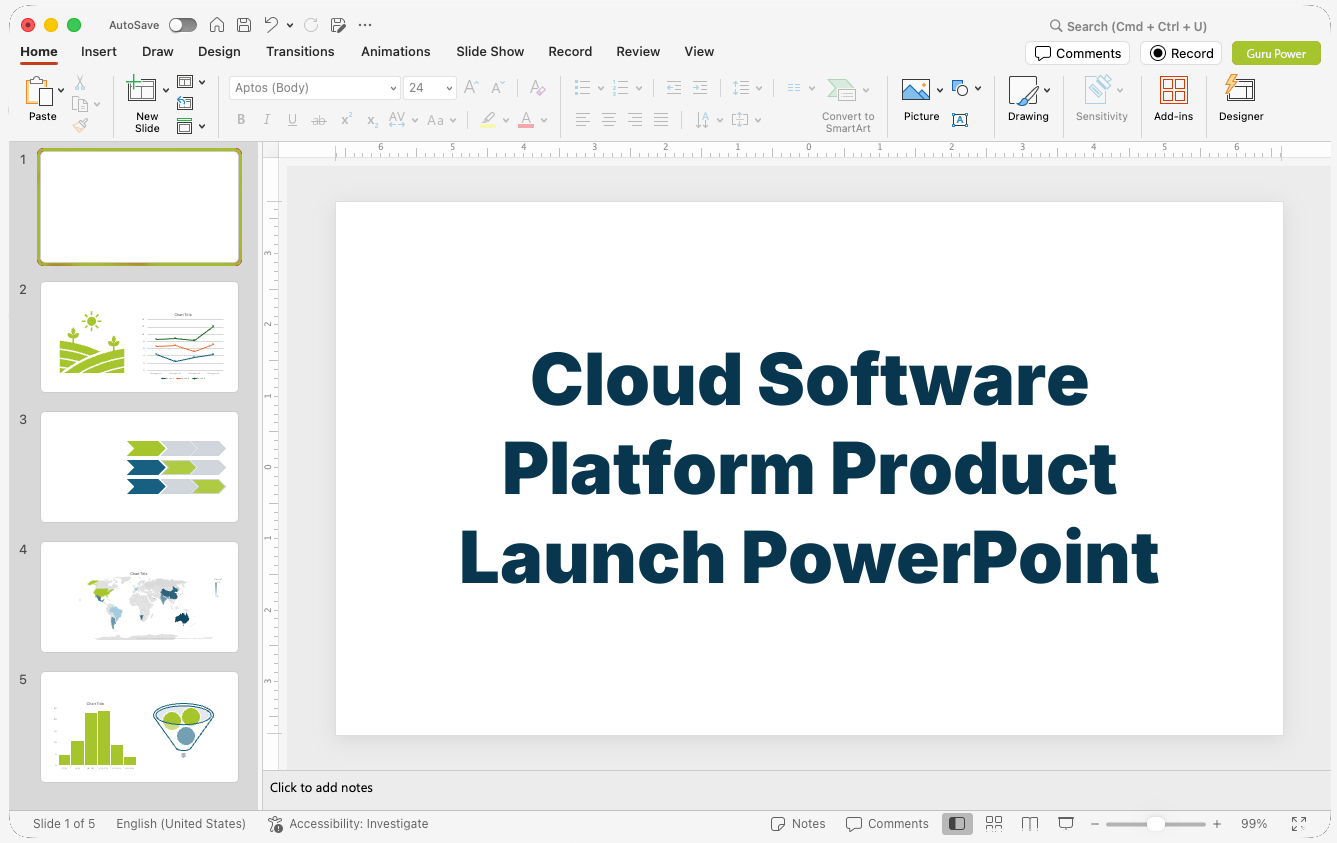
Cloud Software Platform Product Launch PowerPoint
Primary Audience: Industry analysts, existing enterprise customers, and prospective buyers..
Purpose: Drive product adoption, upgrade existing accounts, and secure market positioning..
Description: A Cloud Software Platform Product Launch PowerPoint introduces major platform releases, feature enhancements, and module extensions. This PowerPoint details operational problems solved by new capabilities and highlights workflow efficiency gains. The deck structures product roadmaps into clear thematic visual releases.
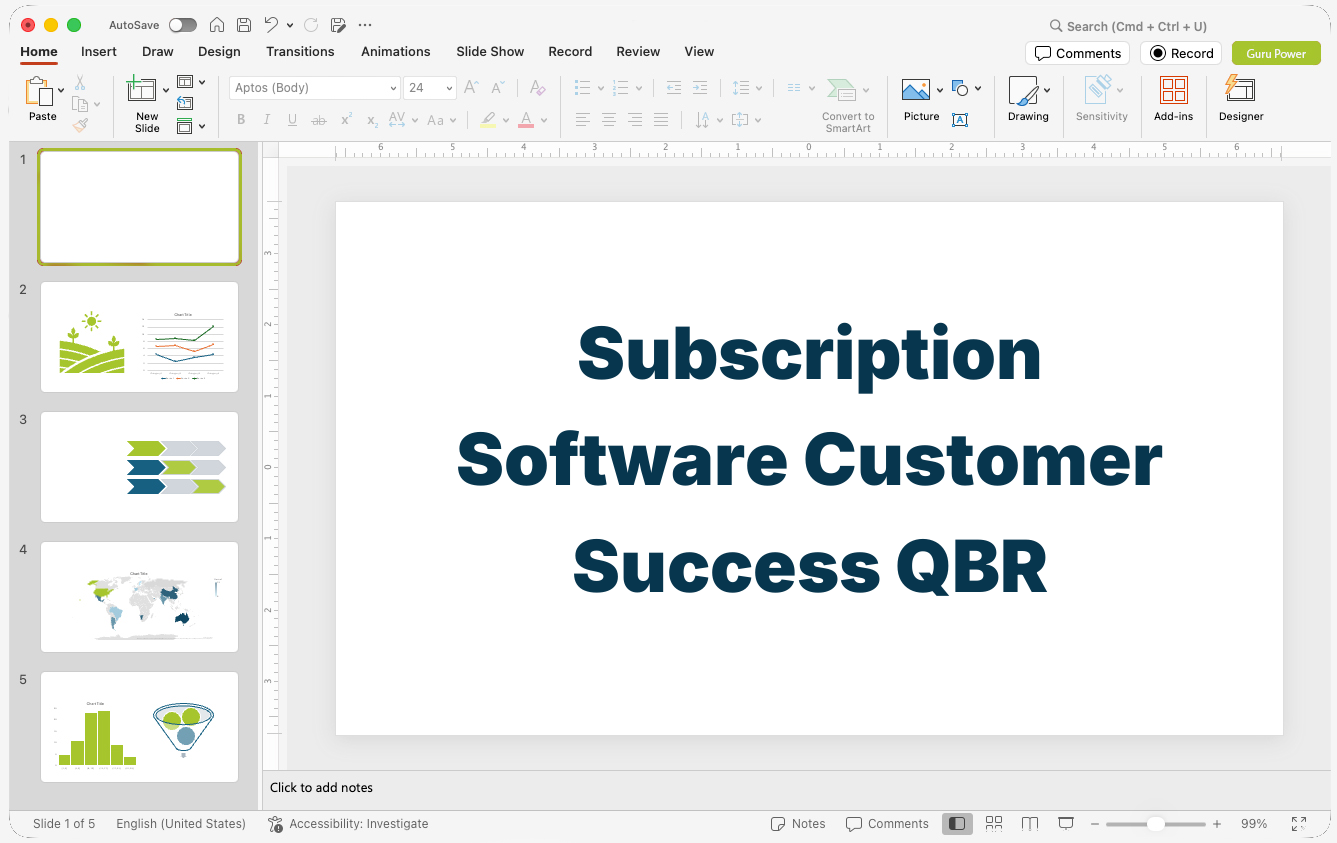
Subscription Software Customer Success QBR Presentation
Primary Audience: Customer executive sponsors, procurement managers, and operational power users..
Purpose: Ensure annual contract renewal, drive upsells, and establish strategic alignment..
Description: A Subscription Software Customer Success QBR Presentation reviews platform utilization metrics, realized business outcomes, and expansion opportunities. This Slide-Deck tracks license consumption, ROI benchmarks, and joint success plans for upcoming quarters. Executives evaluate ongoing software costs against measurable operational achievements.
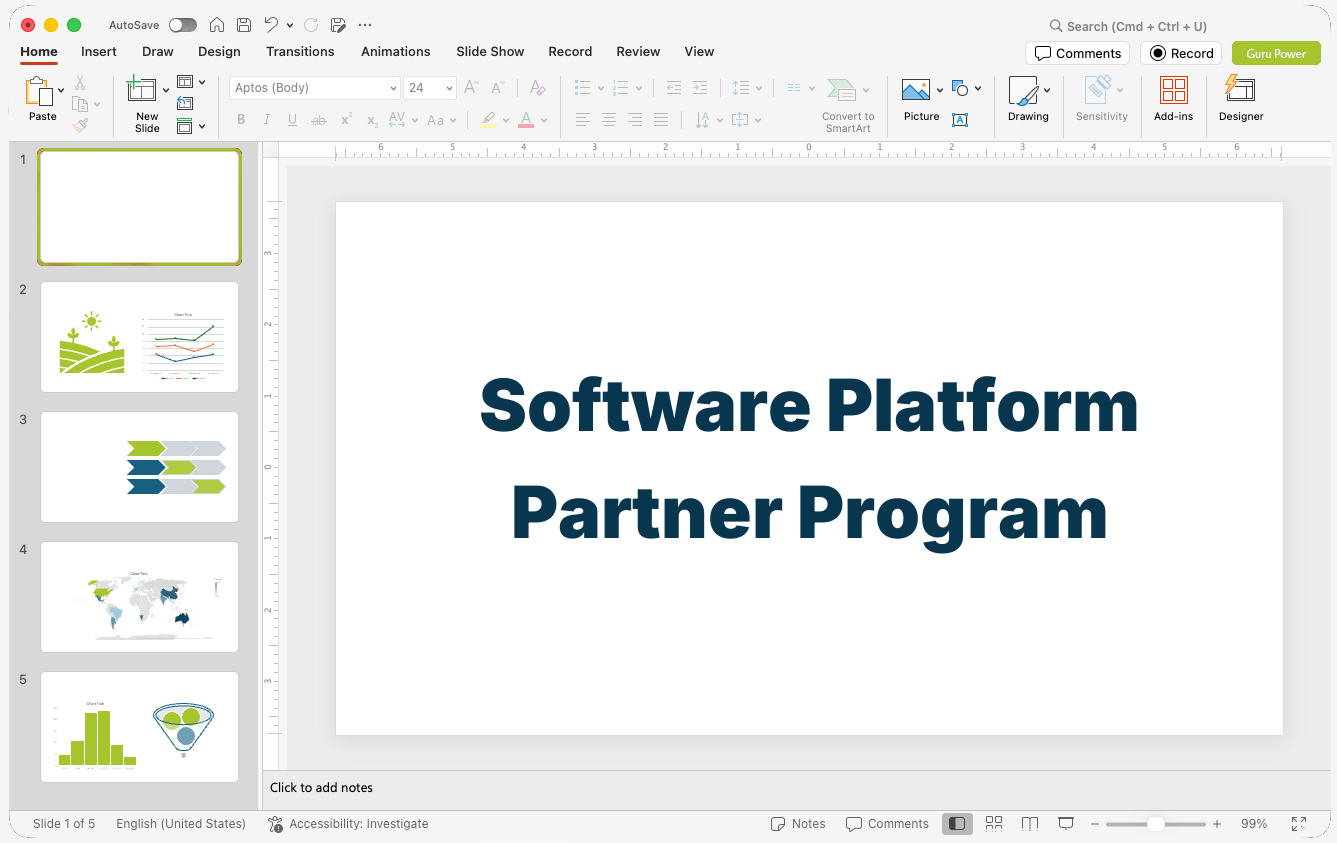
Software Platform Partner Program Pitch-Deck
Primary Audience: Global system integrators, strategic consultancies, and technology alliance leads..
Purpose: Recruit strategic channel partners and establish co-selling frameworks..
Description: A Software Platform Partner Program Pitch-Deck outlines ecosystem value propositions, margins, and joint go-to-market opportunities. This Pitch-Deck defines partner tiers, technical certification requirements, and shared revenue models. Strategic alliance leaders evaluate platform extensibility and market pull before committing consulting resources.
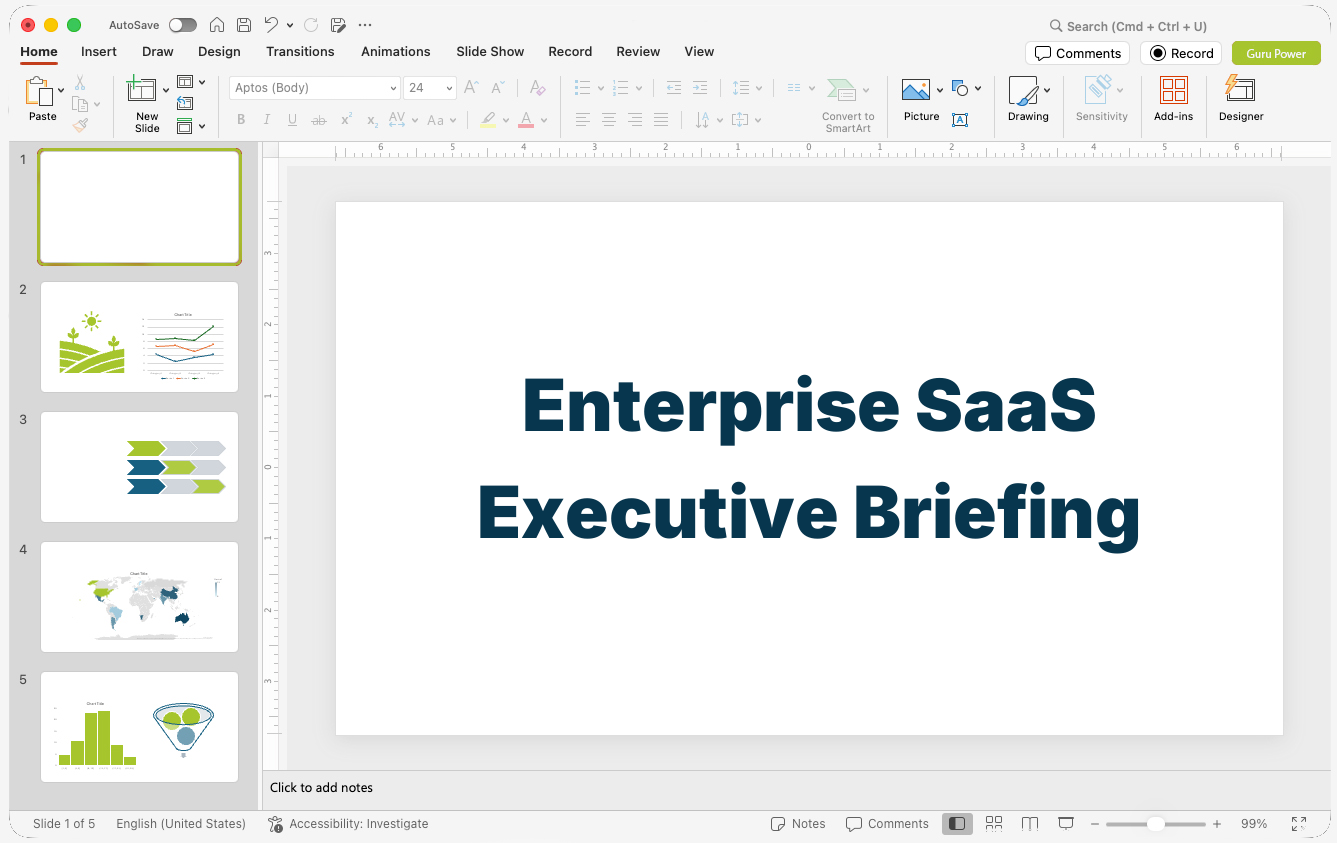
Enterprise SaaS Executive Briefing Presentation
Primary Audience: C-suite executives and board members of target enterprise accounts..
Purpose: Establish top-level strategic alignment and sponsor commitment for digital transformation..
Description: An Enterprise SaaS Executive Briefing Presentation addresses macro industry challenges and corporate strategic transformation goals. This Presentation focuses on high-level operational efficiency, risk mitigation, and competitive positioning enabled by the platform. The visual content minimizes detailed feature walkthroughs in favor of strategic outcomes.
B2B SaaS Pricing Restructuring PowerPoint
Primary Audience: Internal sales teams, account managers, and executive leadership..
Purpose: Enable field sales reps to communicate value-based pricing and tier changes effectively..
Description: A B2B SaaS Pricing Restructuring PowerPoint outlines shifts in license models, usage-based metering, or tier bundling. This PowerPoint equips account executives with messaging frameworks, value justification calculators, and objection-handling slides. Clear internal enablement prevents discounting and protects gross margins during packaging updates.
Cloud Software Platform Strategic Board Slides
Primary Audience: Board of directors, investors, and executive officers..
Purpose: Report company performance, burn rates, market expansion, and strategic risks..
Description: Cloud Software Platform Strategic Board Slides synthesize financial performance, sales pipeline metrics, and product engineering milestones into executive summaries. This Slide-Deck highlights gross margins, rule-of-40 tracking, and strategic hiring updates. Board members expect concise, standardized visuals that enable governance oversight.
Subscription Software Implementation Kickoff Presentation
Primary Audience: Customer project managers, IT deployment teams, and executive sponsors..
Purpose: Establish project governance, deployment milestones, and resource allocation requirements..
Description: A Subscription Software Implementation Kickoff Presentation sets operational expectations for software onboarding. This Presentation defines milestone timelines, integration dependencies, change management protocols, and steering committee structures. Setting structured onboarding expectations prevents scope creep and accelerates time-to-value.
Software Platform Security Compliance Pitch-Deck
Primary Audience: Chief Information Security Officers, compliance teams, and legal counsel..
Purpose: Remove governance barriers and secure formal security approval..
Description: A Software Platform Security Compliance Pitch-Deck details data residency, threat mitigation protocols, and compliance certifications. This Pitch-Deck presents zero-trust access models, audit logging capabilities, and SOC2 Type II status. CISOs require concrete security controls mapped directly to regulatory requirements.
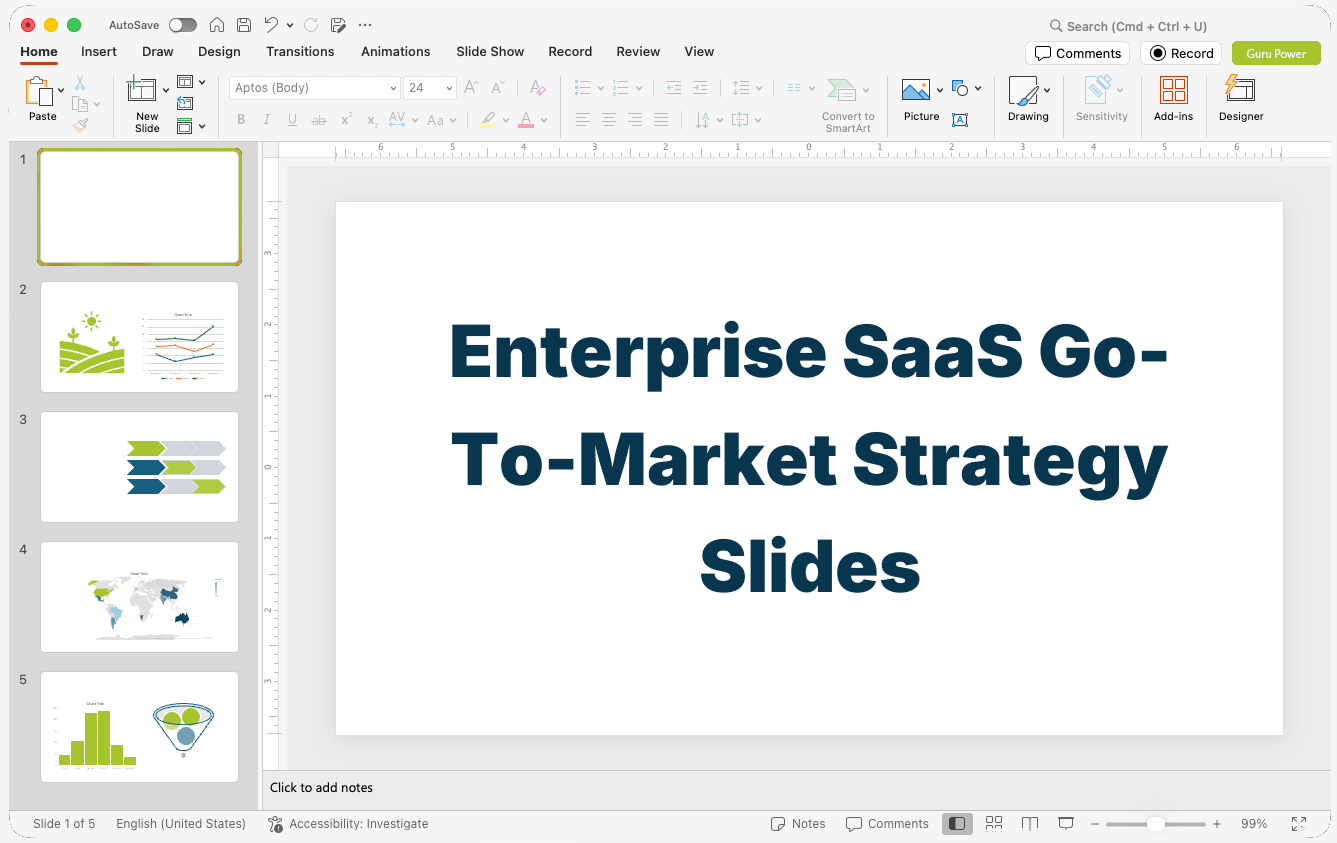
Enterprise SaaS Go-To-Market Strategy Slides
Primary Audience: Internal revenue operations, sales leadership, and marketing teams..
Purpose: Align sales, marketing, and customer success teams around annual growth targets..
Description: Enterprise SaaS Go-To-Market Strategy Slides lay out account coverage models, vertical targeting strategies, and campaign plans. This Slide-Deck visualizes funnel conversion benchmarks, deal sizing targets, and rep capacity models. Clear operational strategy decks ensure cross-functional execution across all revenue teams.
Your PowerPoint, Google Slide and KeyNote Strategy, Story and Design Professionals
Presentation Gurus combines deep software sector knowledge with structured visual design. Design teams format complex multi-tenant system diagrams, operational workflows, and ROI calculators into crisp, brand-compliant Google Slides decks and PowerPoint templates. Every pitch deck and slide deck relies on precise visual hierarchy to direct executive attention where it matters most. Customers need visual tools that maintain total corporate brand consistency while allowing local account executives to customize technical scenarios safely. Partner with Presentation Gurus to transform enterprise software complexity into definitive commercial clarity.
Ready ToGet Started?
Presentation Gurus is open.
Give us a call.
We actually answer the phone.
Questions & Answers
Enterprise Software-as-a-Service (SaaS) Presentations FAQs
What does Enterprise Software-as-a-Service (SaaS) Presentations presentation design cost?
Pricing is simple and clear. A basic slide design or redesign begins at $49 per slide. Premium presentation design, which includes copywriting and basic storytelling, starts at $79 per slide. Custom presentations involving strategy, copywriting and custom graphics are quoted based on your specifications. See complete pricing details here.
What is the typical timeline to design an enterprise software sales deck?
A standard enterprise sales presentation project takes three to four weeks. This includes audience mapping, content structuring, custom visual diagramming, and master template creation in PowerPoint or Google Slides with built-in asset libraries for field teams.
We have sensitive business information. Can you work under an NDA?
Virtually all of our client work is done under an NDA. We have a basic NDA included with our presentation work order, plus an enhanced, expanded non-disclosure agreement available whenever a project calls for it.
How long does it take to get a presentation designed?
If your team needs a complete presentation by 9:00 AM the next day, we can meet that deadline. Most projects take 10 – 15 days, providing we have all the information. Pricing is also based on slide complexity and speed — a basic slide deck with a 15-day delivery costs much less than a premium slide deck delivered the next morning.
How does the collaboration process work?
Everything happens online. Every meeting is a Microsoft Teams call or similar virtual environment where we can share desktops and information in real time. Revision meetings and discovery calls are always scheduled in the morning, so by noon we can begin work on tasks for the next revision meeting.
Will our team receive the fully editable source file?
Yes. Unlike graphic designers who deliver flat PDFs or JPEGs, Presentation Gurus delivers the native, fully editable presentation file (.pptx, .key, etc.) so your team can make last-minute text edits on the fly, or update the presentation later as details change.
Can custom sales presentation templates integrate with existing enterprise design systems?
Yes. Master templates are engineered directly within corporate brand guidelines, using exact typography, tokenized color palettes, and component structures that match existing digital brand standards for seamless team adoption.
How do you translate complex technical architecture into non-technical slides?
Design teams use multi-layered visual frameworks. Top layers highlight business workflows and user outcomes for executive sponsors, while expandable detail views depict API connections, data pipelines, and infrastructure layers for technical evaluators.
How do presentation agencies handle visual security disclosures for enterprise cloud platforms?
Professional agencies use standardized compliance icon sets and abstract architectural diagrams to illustrate SOC2, ISO, and GDPR frameworks without exposing proprietary infrastructure details. The goal is building trust with CISOs using recognized enterprise governance layouts.
Does our industry need a Presentation or a Pitch Deck?
The terms are frequently used interchangeably, but they serve different strategic purposes. A pitch deck is a highly visual, persuasive tool designed to secure a strategic commitment or investment. A standard presentation is an informative, detailed document structured to align stakeholders and share data.
Presentation Gurus' research identifies 15 locations with active Enterprise Software-as-a-Service (SaaS) operations, including San Francisco, CA, San Jose, CA, and Seattle, WA.
Enterprise cloud platforms touch every corner of modern commerce, driven by major technology centers and regional software clusters. On the West Coast, San Francisco, CA serves as a dense headquarters cluster for firms like Salesforce and OpenAI. Just to the south, San Jose, CA provides a core Silicon Valley base for cloud leaders like Adobe and Zoom. Further north, Seattle, WA anchors the Pacific Northwest with giants Microsoft and Amazon Web Services. Down the coast, Los Angeles, CA supports enterprise platforms specialized in digital media, security, and logistics, while San Diego, CA develops dedicated software for healthcare analytics and cybersecurity systems. These operations naturally connect with broader infrastructure fields like Cloud Computing Infrastructure (IaaS/PaaS) and DevOps & Cloud Migration Services.
The Mountain West and regional tech corridors have grown into essential software engines. In Denver, CO, Palantir Technologies and major engineering offices expand the regional footprint, matching wider momentum across Colorado with fast-growing tech ventures like Guild alongside Zoom. Salt Lake City, UT anchors the Silicon Slopes with companies like Qualtrics and Pluralsight. This expands across Utah, where Lehi hosts customer interaction platform Podium. Surrounding states share this momentum: Montana features software hubs in Bozeman and Missoula with firms like Quiq and Submittable, while North Dakota builds out business solutions with CoSchedule in Bismarck and Bushel in Fargo. Early-stage teams navigating this expansion often rely on a clear Series A Growth Deck to secure expansion capital.
Across the central United States, established corporate centers fuel continuous application development. Austin, TX pairs major operations for Oracle and CrowdStrike with an active startup market, while Dallas, TX serves as headquarters for enterprise tax software, supply chain tools, and IT infrastructure vendors. In the Midwest, Chicago, IL hosts marketing and communication leaders ActiveCampaign and Sprout Social. Statewide ecosystems also thrive nearby, including Indiana, where venture studio High Alpha builds a steady pipeline of B2B startups, and Nebraska, home to Lincoln-based Hudl and Omaha-based Workshop. Enterprise teams in these markets consistently refine their go-to-market motions with an Enterprise B2B Sales Pitch and maintain frontline readiness through a targeted Competitive Battlecard / Field Guide.
On the East Coast, Boston, MA acts as an anchor for marketing and infrastructure tools with HubSpot and Dynatrace, while New York, NY drives enterprise data and analytics with Datadog and MongoDB. In Atlanta, GA, commercial software growth centers around platforms like Salesloft and Terminus. Further up the coast, Raleigh, NC and the wider tech community in North Carolina rely on foundational open-source and communication firms like Red Hat and Bandwidth. Near the capital, Washington, DC focuses heavily on public-sector cloud systems and security architectures. Aligning enterprise buyers across these specialized regions often calls for an Account-Based Marketing (ABM) Hyper-Targeted Pitch, paired with a structured Field Marketing Strategy & Event Plan to connect with enterprise accounts in their regional markets.
As cloud architectures become more specialized, software companies partner closely with complementary sectors. Many integrate directly with Cybersecurity & Threat Intelligence providers, rely on IT Managed Service Providers (MSPs) for distribution, or build on foundational Telecommunications & Network Infrastructure and Semiconductor & Hardware Design. Others address vertical requirements in Healthtech & Digital Health Software or power learning ecosystems via Edtech Platform Development. Moving enterprise opportunities across the finish line requires disciplined sales assets, from a structured Pilot / Proof of Concept (PoC) Agreement Pitch to strategic frameworks like the Customer Advisory Council Launch Brief, a clear Brand Strategy & Market Positioning Playbook, and a comprehensive Sell-Side Executive Summary (M&A) when evaluating consolidation or exit opportunities.