
When Healthtech & Digital Health Software Decision-Makers Need Strategic Presentations Addressing Business Outcomes
Healthtech & Digital Health Software Presentation Design is the strategic structuring and visual development of presentation materials for healthcare technology firms to effectively communicate compliance, interoperability, and clinical value to institutional buyers and investors.
Presentation Gurus serves as a specialized presentation design partner for health technology and clinical software organizations. Industry requirements mandate clear communication across complex enterprise environments. We build tailored communications assets including an EHR Integration & Security PowerPoint deck, a Clinical Trial Software Pitch-Deck, and an FDA Regulatory Compliance Presentation. A slide deck must translate technical architecture into digestible business value for health system executives, security officers, and investment committees. Our team structures each presentation around your specific go-to-market objectives and compliance requirements. By aligning visual hierarchy with healthcare decision-making criteria, we ensure your PowerPoint presentation directly answers buyer concerns regarding interoperability, risk, and financial return.
Why Healthtech & Digital Health Software Presentations Need Professional Presentation Design
The data shows that technical complexity creates friction during software evaluations by health system executives, payers, and venture investors. Standard presentations rely on generic feature lists and dense architectural diagrams that fail to communicate economic return or workflow integration. Strategy-led presentation design structures narrative arcs specifically around risk mitigation, clinical validation, and regulatory compliance. This addresses the precise evaluation metrics used by hospital purchasing committees and institutional investors. By translating EHR integrations, security protocols, and patient outcome metrics into structured visual frameworks, pitch materials establish immediate commercial credibility. The problem is that most decks treat software functionality as the main narrative rather than focusing on stakeholder ROI. Solving this requires aligning technical capabilities directly with financial and operational incentives. The measurable outcome is shortened enterprise procurement timelines, improved investor engagement, and clear differentiation in competitive vendor evaluations.
How Working With Us Works
From First Conversation To Finished Deck
Company
Meet JR, our founder. Fortune 500s, SMBs, startups — he’s built presentations for all of them with his team for the past 30 years, and he’s ready to build yours.
Service
Find your fit. We match the right service and scope to your audience, your goals, and your deadline, from 24-hour service to a 15-day turnaround.
Cost
Know the number upfront. Transparent, flat pricing before we start — no surprises, no hidden hours. All from $49 per slide.
Get Started
Tell us about your presentation project. It will take two minutes and we’ll get back to you on our next business day.











14 Essential Presentation Types for Healthtech & Digital Health Software
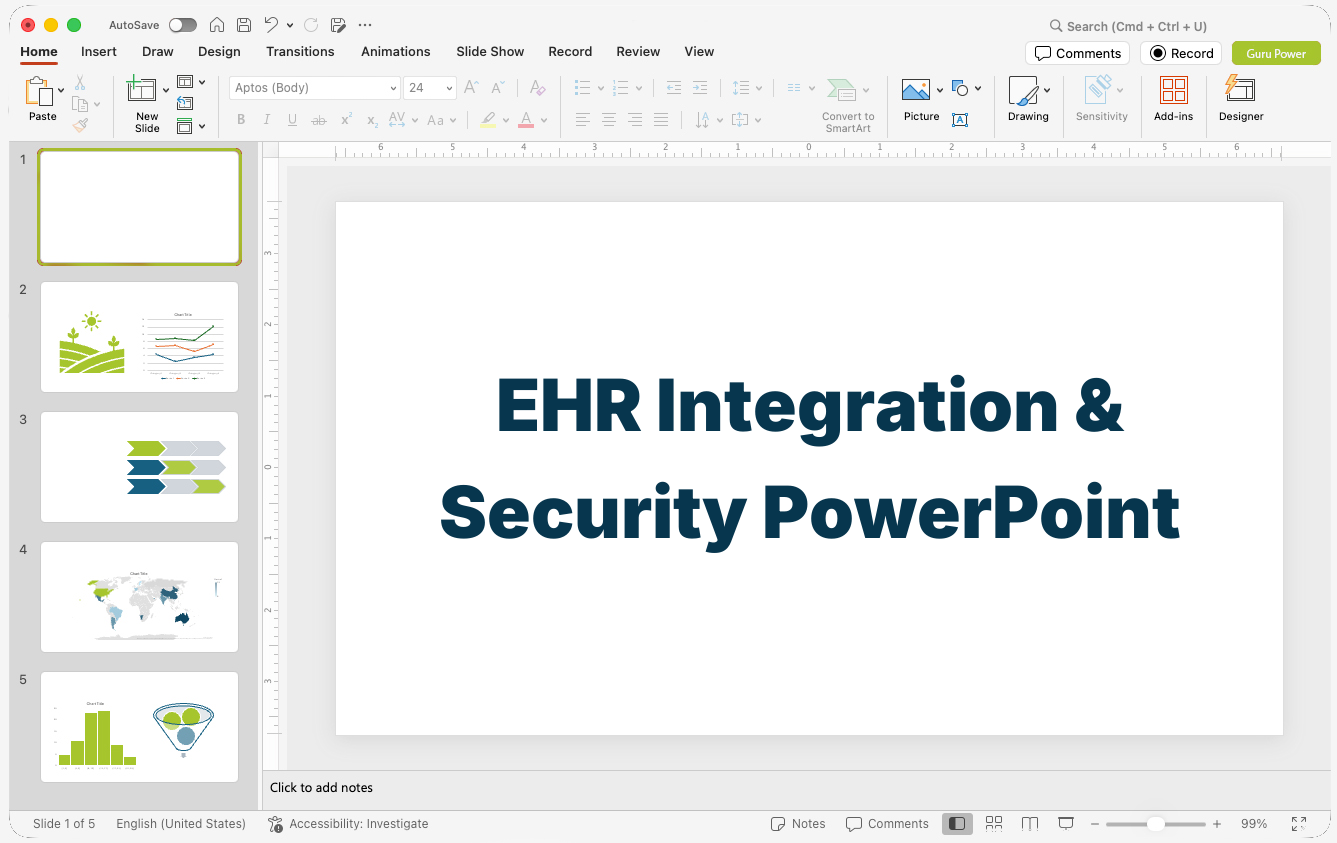
EHR Integration & Security PowerPoint Deck
Primary Audience: Hospital Chief Information Officers and Chief Information Security Officers.
Purpose: Secure technical approval for enterprise platform deployment.
Description: This Healthtech presentation clarifies data flow across FHIR and HL7 protocols. The market requires explicit proof of HIPAA compliance and encryption standards. Visual architectural mapping outlines security controls without overwhelming the audience. This PowerPoint structure demonstrates seamless interoperability with legacy hospital infrastructure.
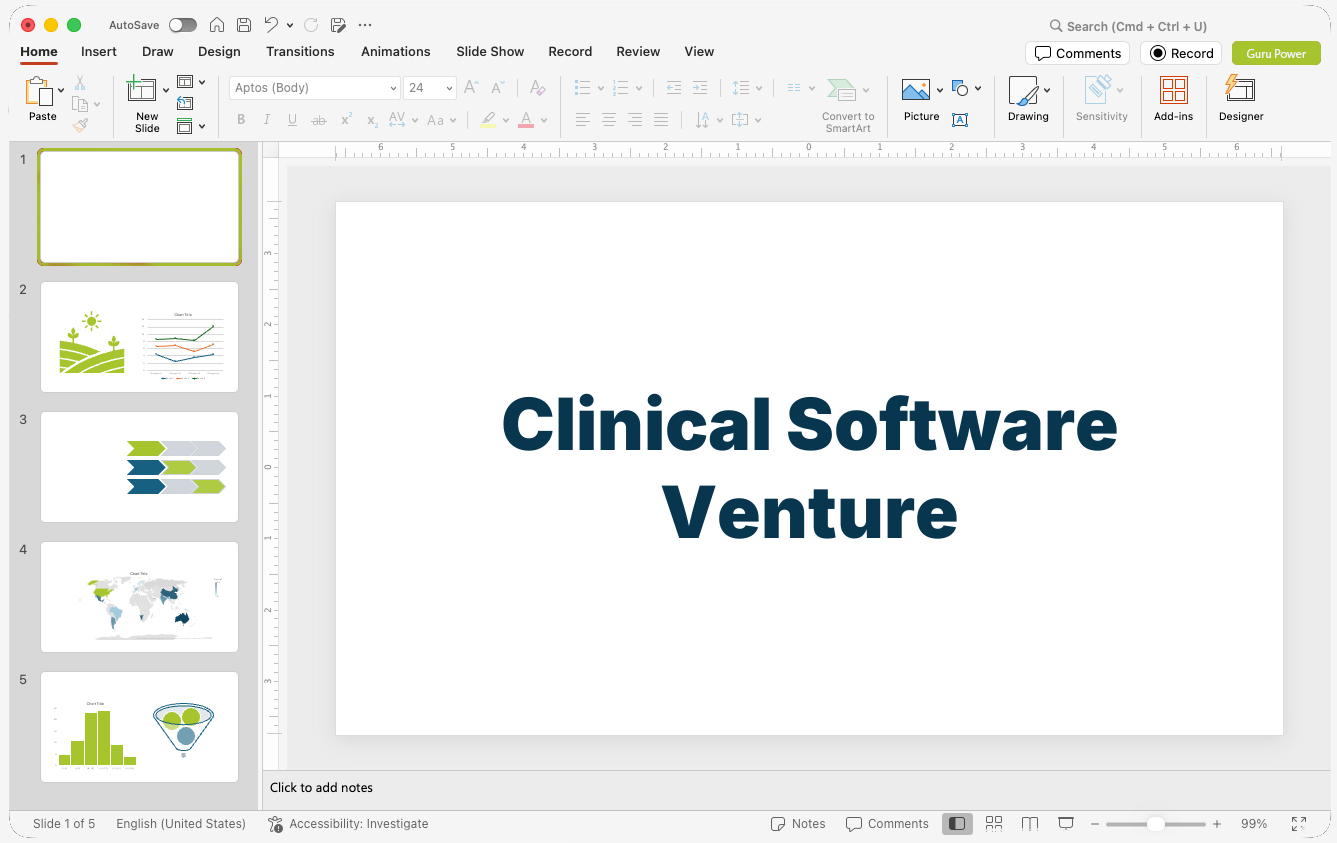
Clinical Software Venture Pitch-Deck
Primary Audience: Institutional Healthcare Venture Capitalists and Angel Investors.
Purpose: Raise Series A or Series B growth capital.
Description: Investors expect clear evidence of market traction and clinical validation. This Digital Health Software Pitch-Deck outlines unit economics, TAM calculations, and regulatory pathways. Visual charts illustrate recurring SaaS revenue growth and customer retention rates. The narrative addresses reimbursement coverage and long-term defensibility.
Telehealth Platform Commercial Sales Slides
Primary Audience: Health System Procurement Committees and Medical Directors.
Purpose: Execute enterprise software licensing agreements.
Description: The problem is proving clinical workflow efficiency to skeptical care teams. These Healthcare IT Slides isolate time savings for providers and improved engagement for patients. Case study frameworks quantify readmission reductions and patient satisfaction scores. The presentation outlines clear deployment phases to minimize operational disruption.
FDA Regulatory Compliance Presentation
Primary Audience: Regulatory Affairs Officers, Board Members, and Strategic Partners.
Purpose: Verify software as a medical device (SaMD) clearance pathways.
Description: Industry requirements mandate precise documentation of clinical evaluation plans. This Health Software Presentation maps pre-market submission milestones and risk classification frameworks. Visual timelines outline verification and validation testing schedules. The layout presents complex regulatory requirements in direct, objective structures.
Value-Based Care Analytics Slide-Deck
Primary Audience: Payer Executives and Managed Care Directors.
Purpose: Establish risk-sharing software partnerships.
Description: Payers need direct proof of medical cost reduction and quality score improvements. This Medical Software Slide-Deck details predictive risk-stratification models and population health metrics. Data visualizers present claim cost offsets and HEDIS measure optimization clearly. The visual narrative demonstrates quantifiable financial return for health plans.
Remote Patient Monitoring Product Launch Presentation
Primary Audience: Physician Network Leadership and Practice Administrators.
Purpose: Drive clinical adoption and device utilization across clinics.
Description: Physicians need clear guidelines on CPT reimbursement codes and staff onboarding. This mHealth Presentation maps the patient enrollment process and clinical escalation protocols. Visual workflow diagrams illustrate data synchronization between wearable sensors and patient portals. This PowerPoint presentation addresses workflow burden directly to accelerate adoption.
Digital Therapeutics Clinical Evidence Pitch-Deck
Primary Audience: Pharmacy and Therapeutics (P&T) Committees and Payers.
Purpose: Gain formulary placement and coverage determination.
Description: Formulary decisions depend on rigorous clinical trial outcomes and economic models. This Health Technology Pitch-Deck structures randomized controlled trial results and real-world evidence data. Charts clearly depict primary endpoint achievements alongside cost-effectiveness ratios. The slide deck translates complex trial data into actionable coverage arguments.
Healthcare AI SaaS Enterprise Pitch-Deck
Primary Audience: Chief Medical Officers and Enterprise Innovation Leaders.
Purpose: Contract enterprise pilot programs and software licenses.
Description: Healthtech leaders must address model accuracy and algorithmic bias transparently. This Healthtech Pitch-Deck breaks down model training methodologies, clinical validation, and physician-in-the-loop safeguards. Visual infographics depict time saved per diagnostic review cycle. The slides demonstrate clear operational efficiency without compromising clinical safety.
Population Health Platform Board Slides
Primary Audience: Board of Directors and Executive Leadership.
Purpose: Report quarterly ARR growth and product expansion metrics.
Description: Board members require concise operational tracking and financial forecasting. These Digital Health Software Slides showcase churn rates, net revenue retention, and implementation backlogs. Concise dashboard layouts highlight strategic milestones achieved across hospital networks. The presentation provides transparent reporting on market penetration and capital burn.
Clinical Trial Software Demonstration Deck
Primary Audience: Pharmaceutical Sponsors and Contract Research Organizations.
Purpose: Contract software for decentralized clinical trials.
Description: Sponsors need guarantees regarding data integrity and trial participant retention. This Healthcare IT deck highlights eCOA/ePRO capabilities and investigator site workflows. Visual comparison grids showcase enrollment velocity against traditional trial benchmarks. The layout emphasizes data security and protocol adherence across research sites.
Medical Imaging SaaS Strategic Merger Presentation
Primary Audience: Investment Bankers, Board Members, and Strategic Acquirers.
Purpose: Approve strategic M&A transactions or joint ventures.
Description: Consolidation transactions require clear proof of technology synergies and combined market share. This Clinical Software Presentation details product portfolio integration and cross-sell opportunities. Financial graphics map revenue synergies and operational efficiency gains post-acquisition. The narrative highlights expanded health system market coverage.
Pharmacy Management Software Go-To-Market Slides
Primary Audience: Retail Pharmacy Executives and Health System Pharmacy Directors.
Purpose: Secure multi-site software implementation contracts.
Description: Pharmacy directors prioritize inventory accuracy, automated dispensing, and prescription sync. These Health Software Slides illustrate reductions in medication fulfillment errors and processing times. Visual workflow models demonstrate direct integration with central pharmacy management systems. The presentation highlights rapid time-to-value for high-volume pharmacies.
Patient Engagement App Investor Presentation
Primary Audience: Growth Equity Investors and Strategic Corporate VCs.
Purpose: Secure expansion funding for commercial scaling.
Description: Growth investors evaluate daily active user metrics and health outcome tracking. This mHealth Presentation displays user retention curves, customer acquisition costs, and lifetime value calculations. Product interface callouts show intuitive care plan navigation and portal messaging. The slide deck emphasizes scalable distribution channels through health systems and employers.
Precision Medicine Data Platform PowerPoint Deck
Primary Audience: Genomics Research Institutes and Biotech Executives.
Purpose: Establish research data platform licensing agreements.
Description: Research leaders require advanced data harmonization and scalable compute capabilities. This Health Technology PowerPoint deck illustrates genomic data ingestion pipelines and cohort discovery tools. Diagrams outline federated data governance structures and compliance controls. The narrative establishes technological superiority in handling complex multi-omic datasets.
Your PowerPoint, Google Slide and KeyNote Strategy, Story and Design Professionals
Our team transforms technical documentation into structured visual narratives that resonate with enterprise healthcare buyers. We establish brand consistency, build clear visual hierarchies, and convert complex data into standalone visual frameworks. Whether preparing a commercial slide deck for health system procurement or a strategic pitch deck for institutional investors, Presentation Gurus delivers polished, compliant visual assets. Contact Presentation Gurus today to schedule a consultation and elevate your next presentation.
Ready ToGet Started?
Questions & Answers
Healthtech & Digital Health Software Presentations FAQs
Will our team receive the fully editable source file?
Yes. Unlike graphic designers who deliver flat PDFs or JPEGs, Presentation Gurus delivers the native, fully editable presentation file (.pptx, .key, etc.) so your team can make last-minute text edits on the fly, or update the presentation later as details change.
Does our industry need a Presentation or a Pitch Deck?
The terms are frequently used interchangeably, but they serve different strategic purposes. A pitch deck is a highly visual, persuasive tool designed to secure a strategic commitment or investment. A standard presentation is an informative, detailed document structured to align stakeholders and share data.
What does Healthtech & Digital Health Software Presentations presentation design cost?
Pricing is simple and clear. A basic slide design or redesign begins at $49 per slide. Premium presentation design, which includes copywriting and basic storytelling, starts at $79 per slide. Custom presentations involving strategy, copywriting and custom graphics are quoted based on your specifications. See complete pricing details here.
How does the collaboration process work?
Everything happens online. Every meeting is a Microsoft Teams call or similar virtual environment where we can share desktops and information in real time. Revision meetings and discovery calls are always scheduled in the morning, so by noon we can begin work on tasks for the next revision meeting.
Can you adapt engineering software documentation into executive-ready sales slides?
Yes. We translate detailed technical specifications and API documentation into high-level functional diagrams and modular benefit frameworks designed for non-technical purchasing committees.
How do you explain complex HIPAA compliance and EHR security features in a presentation deck?
We replace walls of regulatory text with structured visual architecture diagrams and compliance flowcharts. This addresses security officer requirements immediately while maintaining executive engagement through clear risk-mitigation summaries.
How do you maintain strict brand guidelines across clinical and commercial pitch decks?
We build standardized master slide templates with flexible visual components, predefined typography scales, and compliant color palettes tailored specifically for enterprise healthcare communications.
What presentation structure works best when pitching digital health platforms to hospital CFOs?
Hospital CFOs focus on cost reduction, implementation timelines, and reimbursement models. We lead with quantified financial impact, followed by clinical outcome metrics, risk mitigation strategies, and integration requirements.
How long does it take to get a presentation designed?
If your team needs a complete presentation by 9:00 AM the next day, we can meet that deadline. Most projects take 10 – 15 days, providing we have all the information. Pricing is also based on slide complexity and speed — a basic slide deck with a 15-day delivery costs much less than a premium slide deck delivered the next morning.
We have sensitive business information. Can you work under an NDA?
Virtually all of our client work is done under an NDA. We have a basic NDA included with our presentation work order, plus an enhanced, expanded non-disclosure agreement available whenever a project calls for it.
Presentation Gurus' research identifies 15 locations with active Healthtech & Digital Health Software operations, including Boston, MA, San Francisco, CA, and Nashville, TN.
Modern health software platforms power patient care, clinical research, and operational workflows across the country. In the Northeast, major clinical and academic systems anchor ongoing innovation. Teams in Boston, MA build around Mass General Brigham and ventures near Kendall Square, while innovators in New York, NY tap into strong digital health investment capital and health plan enterprise headquarters. Nearby, organizations in Philadelphia, PA leverage academic health networks and local tech accelerators to build new care management systems.
Healthcare operations expand steadily through the South and Midwest. In Nashville, TN, operators work alongside HCA Healthcare and major healthcare IT platforms, reinforcing healthcare technology as an economic driver throughout Tennessee. Teams in Atlanta, GA collaborate near the CDC and established medical software employers, while the Research Triangle cluster in Raleigh, NC advances clinical software and contract research tools. In Chicago, IL, software groups grow through the Matter health incubator, and the Medical Alley community in Minneapolis, MN connects established hospital systems with digital health platform providers. In Ohio and Pennsylvania, commercialization initiatives thrive at Cleveland Clinic Innovations in Cleveland, OH, matched by healthcare artificial intelligence projects guided by UPMC Enterprises in Pittsburgh, PA.
Western tech hubs bring specialized engineering strength to patient care tools. Startups and dedicated venture capital groups drive momentum in San Francisco, CA, while teams in San Diego, CA focus on digital therapeutics, medical device software, and clinical research platforms. Clinical software engineers also build in Austin, TX, and growing startup headquarters establish roots in Denver, CO. Further north, technologists in Seattle, WA combine cloud computing infrastructure with healthtech application development.
Building clinical applications requires close coordination with broader technical sectors. Healthtech engineering relies heavily on Cloud Computing Infrastructure (IaaS/PaaS) and structured Enterprise Software-as-a-Service (SaaS) models. Maintaining compliance and protecting patient records demands collaboration with Cybersecurity & Threat Intelligence providers and support from IT Managed Service Providers (MSPs). Furthermore, systems benefit from robust Telecommunications & Network Infrastructure, modern DevOps & Cloud Migration Services, specialized processing from Semiconductor & Hardware Design, and shared digital training interfaces developed alongside Edtech Platform Development. When sharing technical architectures or operational updates, partnering with an experienced presentation designer helps teams communicate complex healthcare workflows with clarity.