
When Public Sector Decision-Makers Need Strategic Presentations Addressing Critical Operational Outcomes
Government Agencies (Federal, State, Local) Presentation Design refers to specialized visual formatting, message structuring, and data visualization designed to help public sector leaders communicate policy, budgets, and operational performance to oversight bodies.
Presentation Gurus acts as a dedicated presentation design partner for public sector leadership across federal, state, and municipal entities. We build tailored collateral designed specifically to navigate strict administrative requirements and complex procurement environments. Whether your team requires an executive briefing slide deck, a formal policy presentation, an interactive public hearing PowerPoint, or a strategic vendor pitch deck, our team aligns visual layouts with your operational goals. We understand the precise requirements of regulatory briefings, inter-agency program updates, and technology modernization proposals.
Why Government Agencies (Federal, State, Local) Presentations Need Professional Presentation Design
Government Agencies (Federal, State, Local) face unique communication hurdles when translating policy, technical architecture, and fiscal requests to oversight bodies. Standard off-the-shelf templates obscure vital compliance details, create ambiguity in budgetary requests, and fail to satisfy rigorous public sector audit standards. Strategy-led presentation design restructures complex regulatory and technical data into logical visual frameworks. This approach establishes transparent narratives that clearly delineate risk mitigation, resource allocation, and program milestones. By replacing cluttered bullet points with targeted data visualization and structured executive summaries, public sector leaders reduce decision latency, satisfy strict reporting mandates, and gain fast alignment from legislative and inter-agency authorities.
How Working With Us Works
From First Conversation To Finished Deck
Company
Meet JR, our founder. Fortune 500s, SMBs, startups — he’s built presentations for all of them with his team for the past 30 years, and he’s ready to build yours.
Service
Find your fit. We match the right service and scope to your audience, your goals, and your deadline, from 24-hour service to a 15-day turnaround.
Cost
Know the number upfront. Transparent, flat pricing before we start — no surprises, no hidden hours. All from $49 per slide.
Get Started
Tell us about your presentation project. It will take two minutes and we’ll get back to you on our next business day.















13 Essential Presentation Types for Government Agencies (Federal, State, Local)
Government Agencies Federal Budget Appropriation Presentation
Primary Audience: Congressional Appropriations Committees and Agency CFOs.
Purpose: Secure annual fiscal budget allocations and explain program expenditure breakdowns.
Description: This PowerPoint slide deck details line-item budget requests, historical expenditure trends, and projected program outcomes. The data shows clear fiscal allocation across major operational divisions. Visual tables and simplified spending charts allow legislative committees to evaluate financial requests efficiently.
Public Sector Legacy Systems Modernization Pitch-Deck
Primary Audience: Agency CIOs, Legislative Technology Committees, and Oversight Boards.
Purpose: Gain authorization and funding for enterprise IT infrastructure upgrades.
Description: This Pitch-Deck outlines technical debt, cybersecurity vulnerabilities, and phased deployment milestones for legacy system migration. Industry requirements mandate clear risk assessment graphics and timeline projections. The presentation structures complex technical architecture into clear executive choices.
Civil Infrastructure Agencies Capital Improvement Plan Slides
Primary Audience: City Councils, State Transportation Boards, and Regional Planning Commissions.
Purpose: Obtain approval for multi-year infrastructure development and funding plans.
Description: This Slide-Deck presents regional transport, water, and public utility projects alongside cost-benefit analyses. Strategic maps and timeline diagrams clearly communicate construction phases and economic impact. The goal is providing local decision-makers with actionable oversight data.
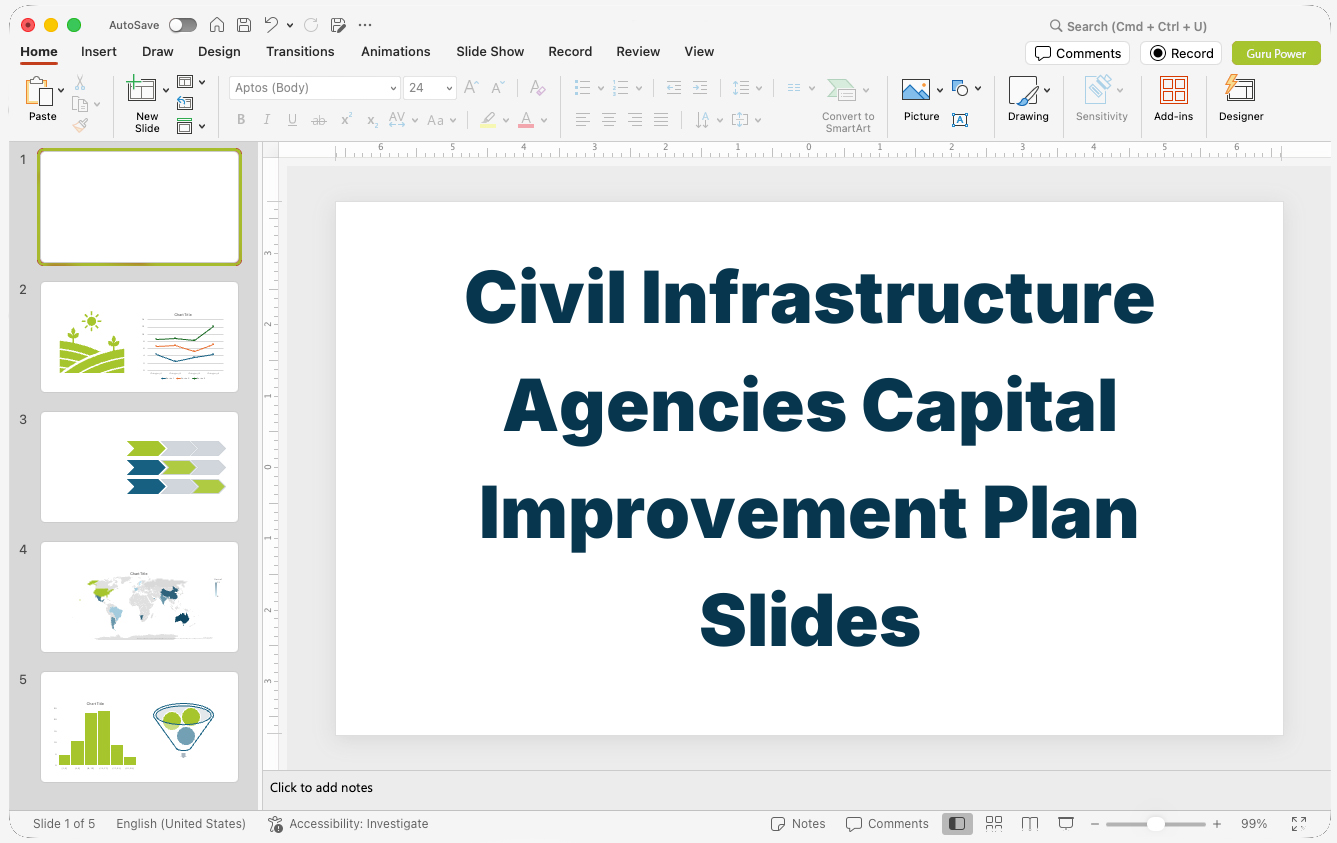
Federal Entities Regulatory Compliance Mandate Presentation
Primary Audience: Regulated Industry Executives, State Agency Directors, and Compliance Officers.
Purpose: Communicate updated statutory rules, enforcement timelines, and reporting standards.
Description: This presentation defines operational compliance standards and administrative penalties for non-compliance. Process flowcharts and regulatory checklists simplify legal language for regulated organizations. The structured layout ensures consistent policy implementation across jurisdictions.
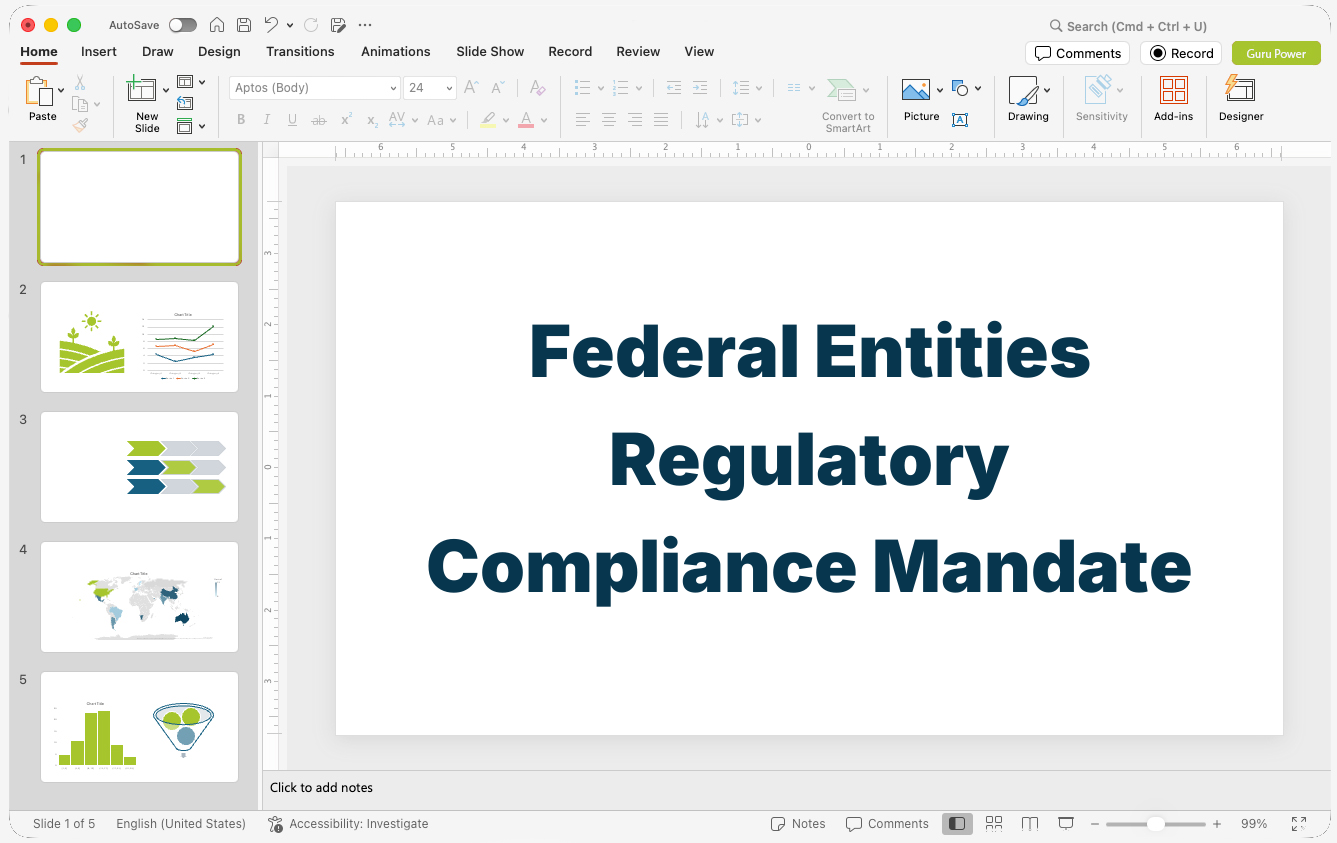
State and Local Municipalities Economic Development Pitch-Deck
Primary Audience: Corporate Relocation Executives, Real Estate Developers, and Investment Councils.
Purpose: Attract business investment and employment expansion to the local jurisdiction.
Description: This Pitch-Deck highlights municipal tax incentives, workforce demographics, and commercial zone infrastructure. Clean data visualizers present regional economic advantage statistics clearly. The narrative positions the city as an optimal location for long-term commercial growth.
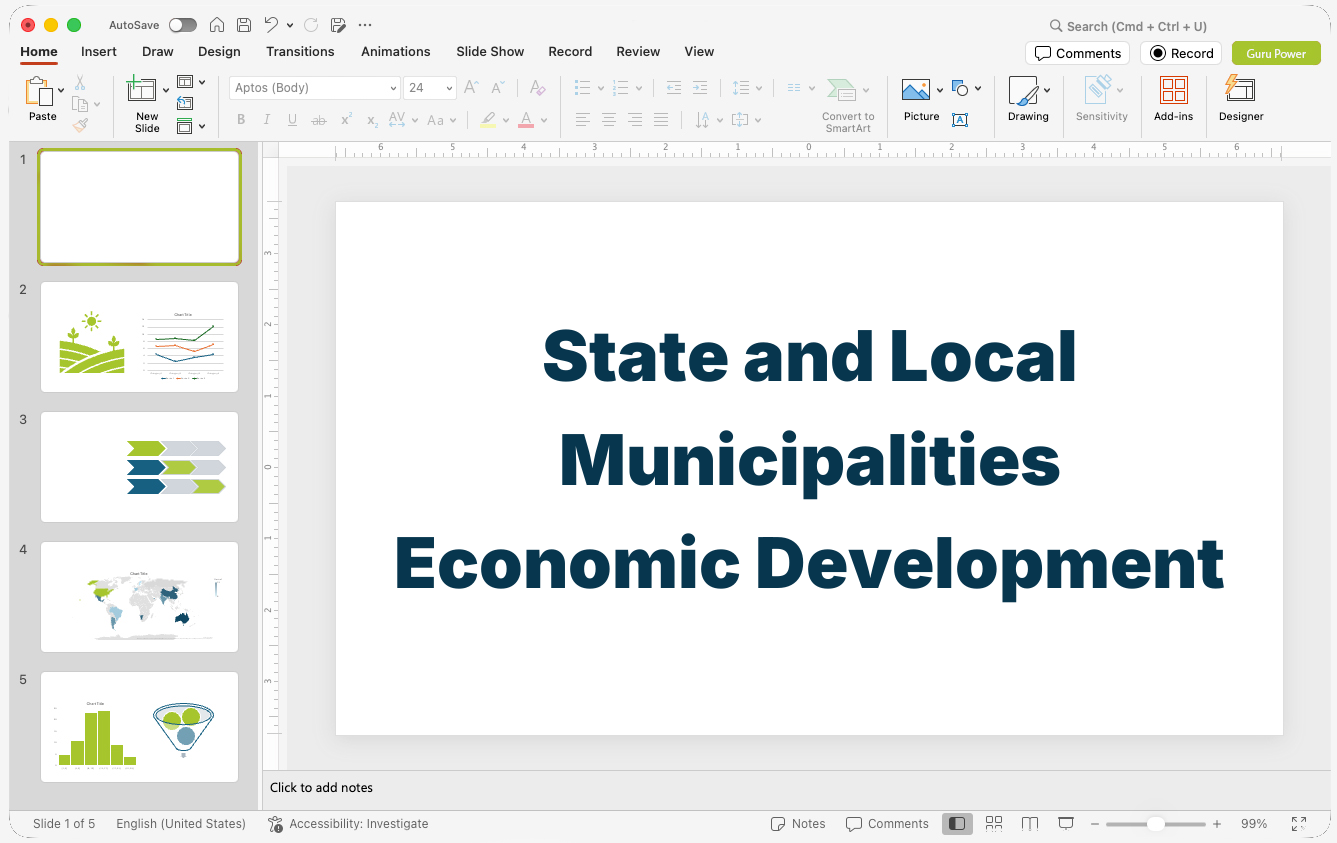
Regulatory Bodies Environmental Impact Assessment Slide-Deck
Primary Audience: Public Hearing Attendees, Environmental Protection Boards, and Local Officials.
Purpose: Present scientific environmental research findings and mitigation strategies.
Description: This Slide-Deck distills complex environmental data, air/water quality metrics, and ecological risk assessments into digestible visual formats. Infographics illustrate long-term environmental remediation plans and community safeguards. The clarity of the content addresses public concern directly during formal review meetings.
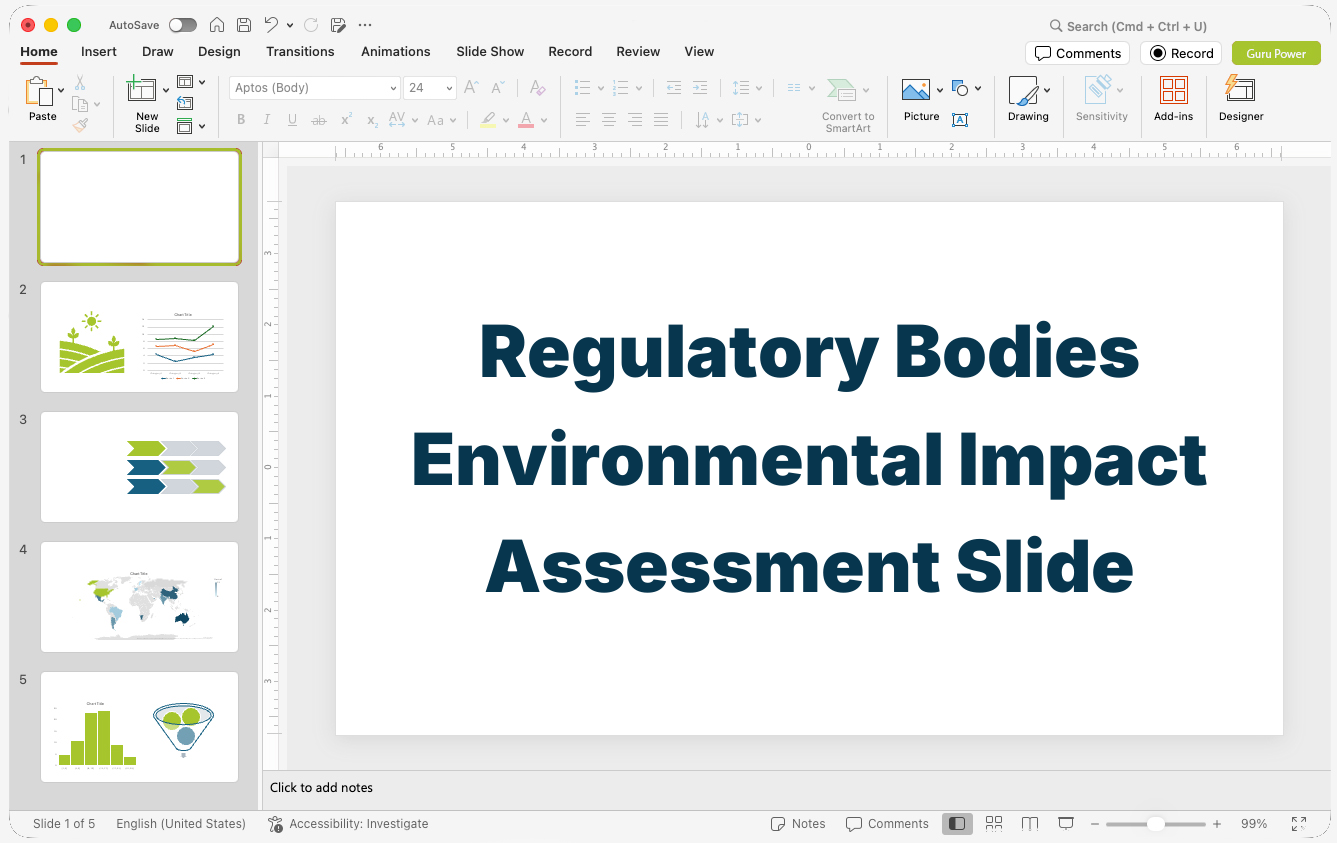
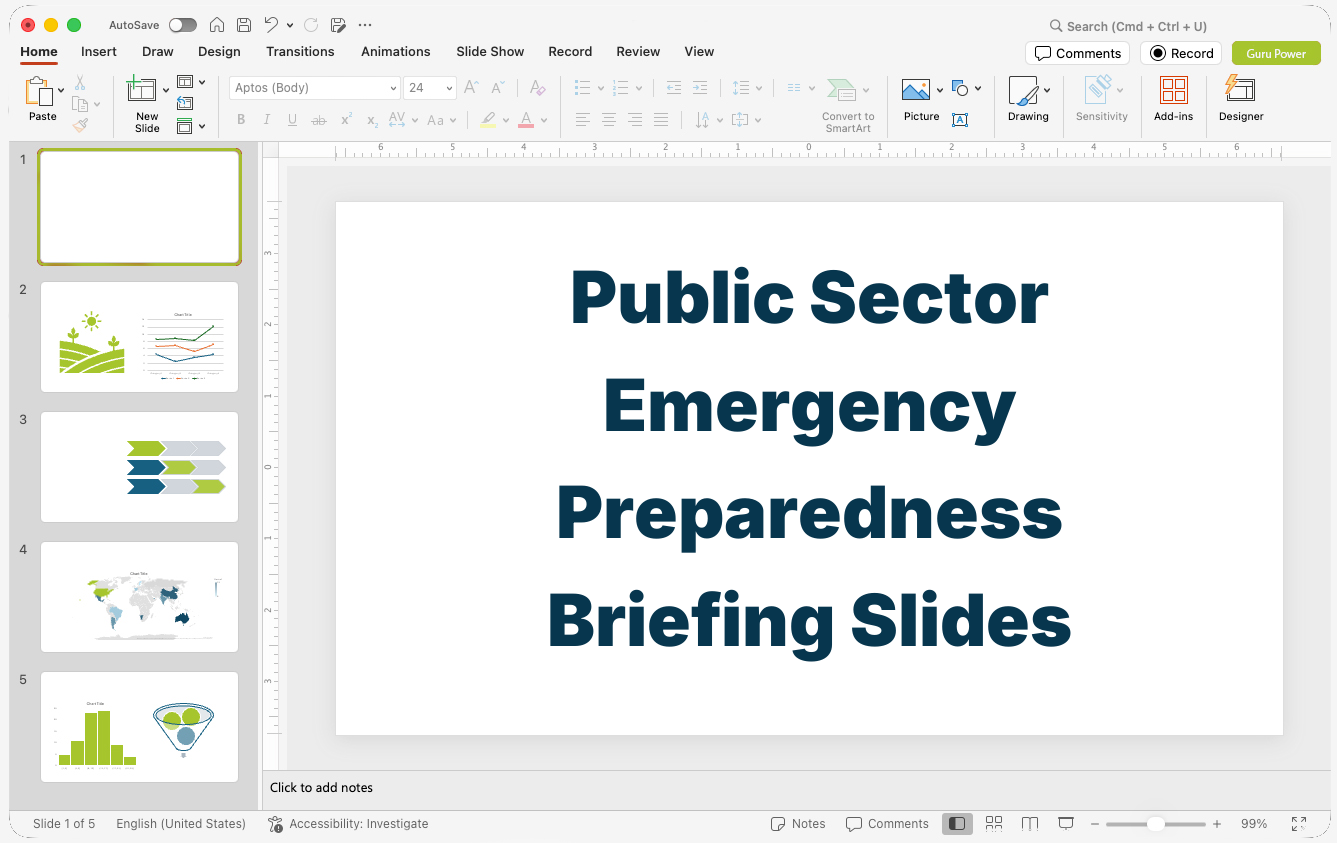
Public Sector Emergency Preparedness Briefing Slides
Primary Audience: First Responders, Municipal Emergency Management Directors, and State Officials.
Purpose: Align inter-agency disaster response protocols and resource allocation strategies.
Description: This presentation outlines command structures, evacuation routes, and communication protocols for crisis response. High-impact visual maps and decision trees ensure rapid situational awareness for agency leaders. The structured content standardizes cross-jurisdictional emergency management.
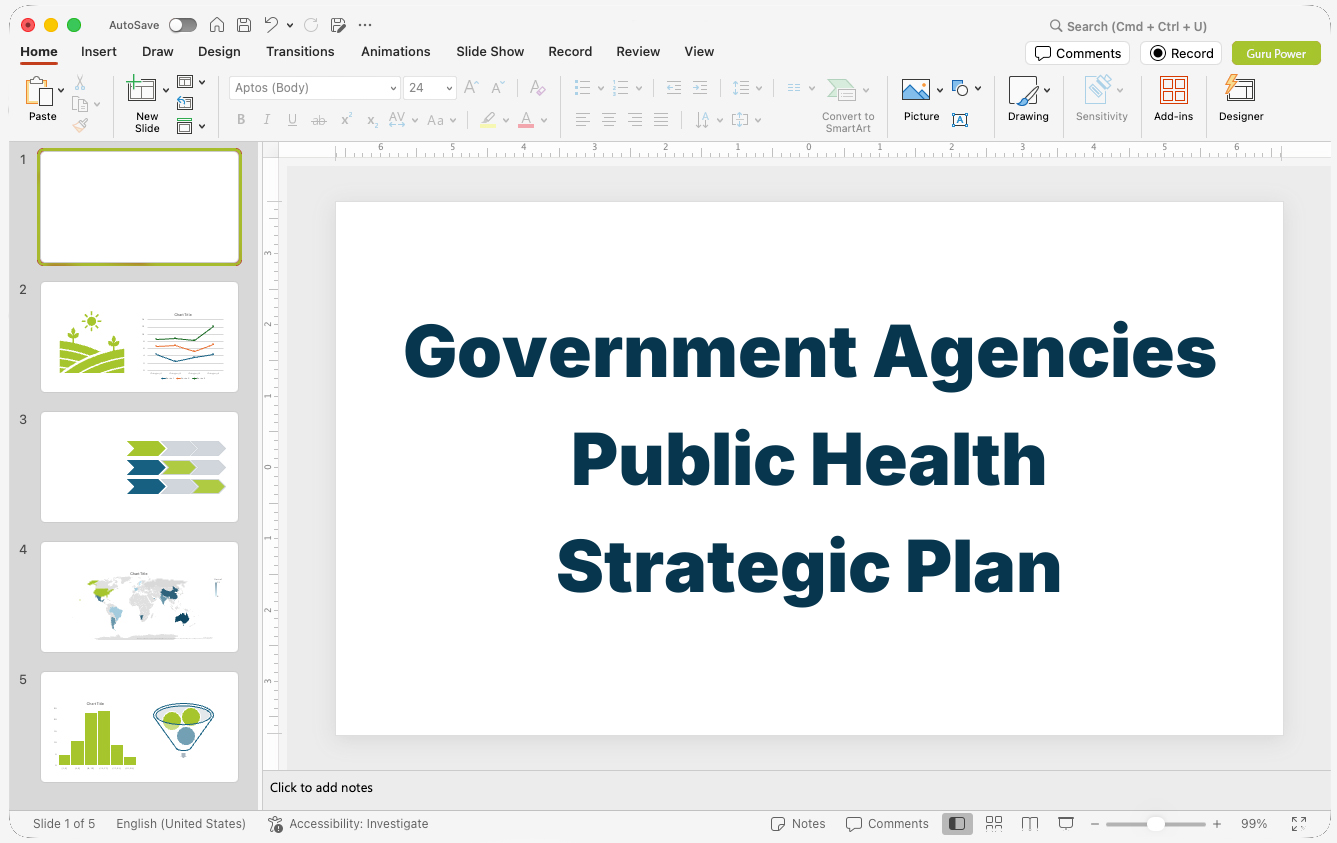
Government Agencies Public Health Strategic Plan Presentation
Primary Audience: Healthcare System Leaders, County Health Commissioners, and Public Stakeholders.
Purpose: Roll out community health initiatives and preventative care funding programs.
Description: This PowerPoint slide deck maps regional health trends, demographic risk factors, and intervention performance metrics. Strategic data graphs highlight intervention efficacy and resource distribution goals. The design translates epidemiological findings into clear operational objectives.
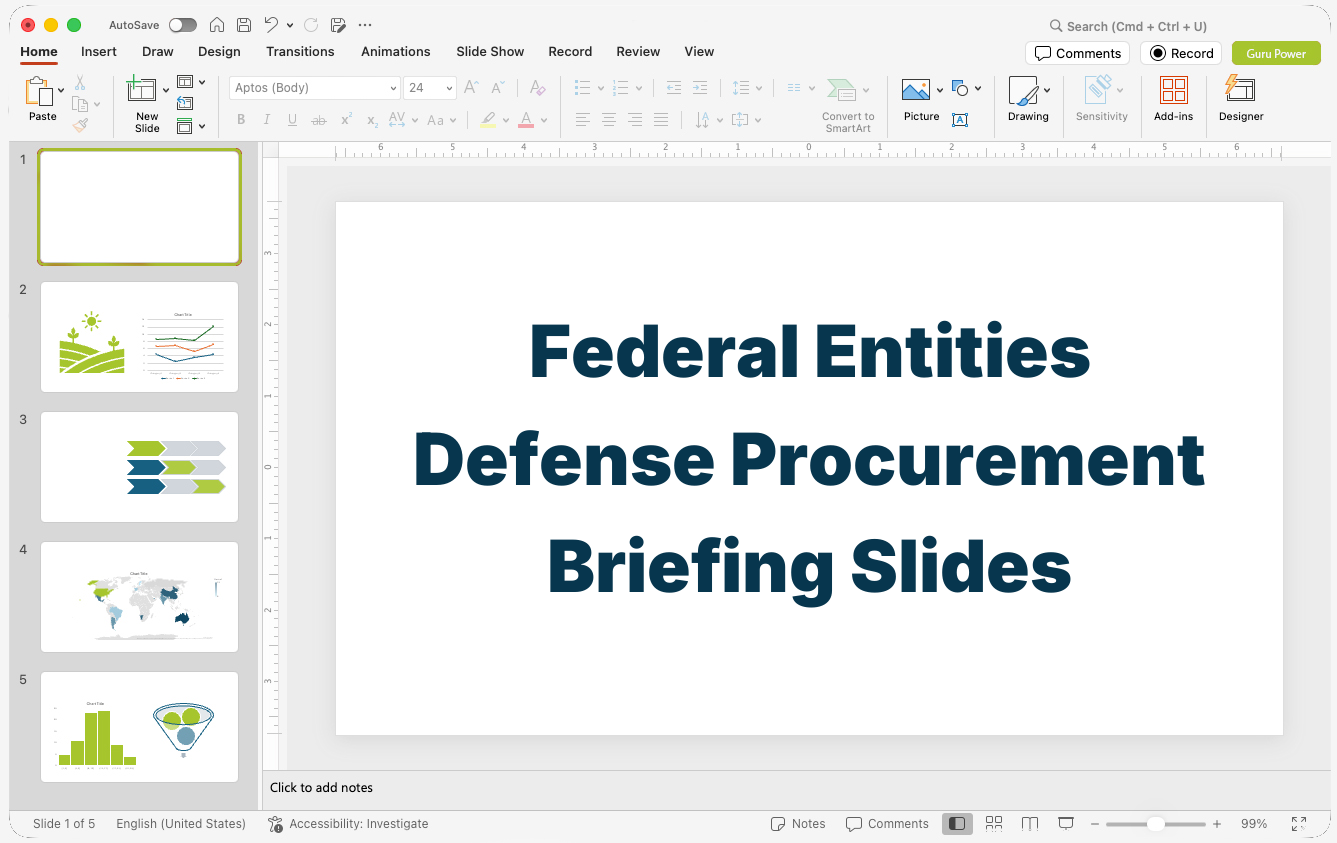
Federal Entities Defense Procurement Briefing Slides
Primary Audience: Department Officials, Defense Contracting Officers, and Military Leadership.
Purpose: Evaluate vendor capability proposals and system procurement logistics.
Description: This Slide-Deck details hardware specifications, contract delivery schedules, and compliance metrics for defense acquisitions. Standardized comparison tables compare vendor milestones against statutory requirements. The narrative ensures clear technical evaluation during procurement reviews.
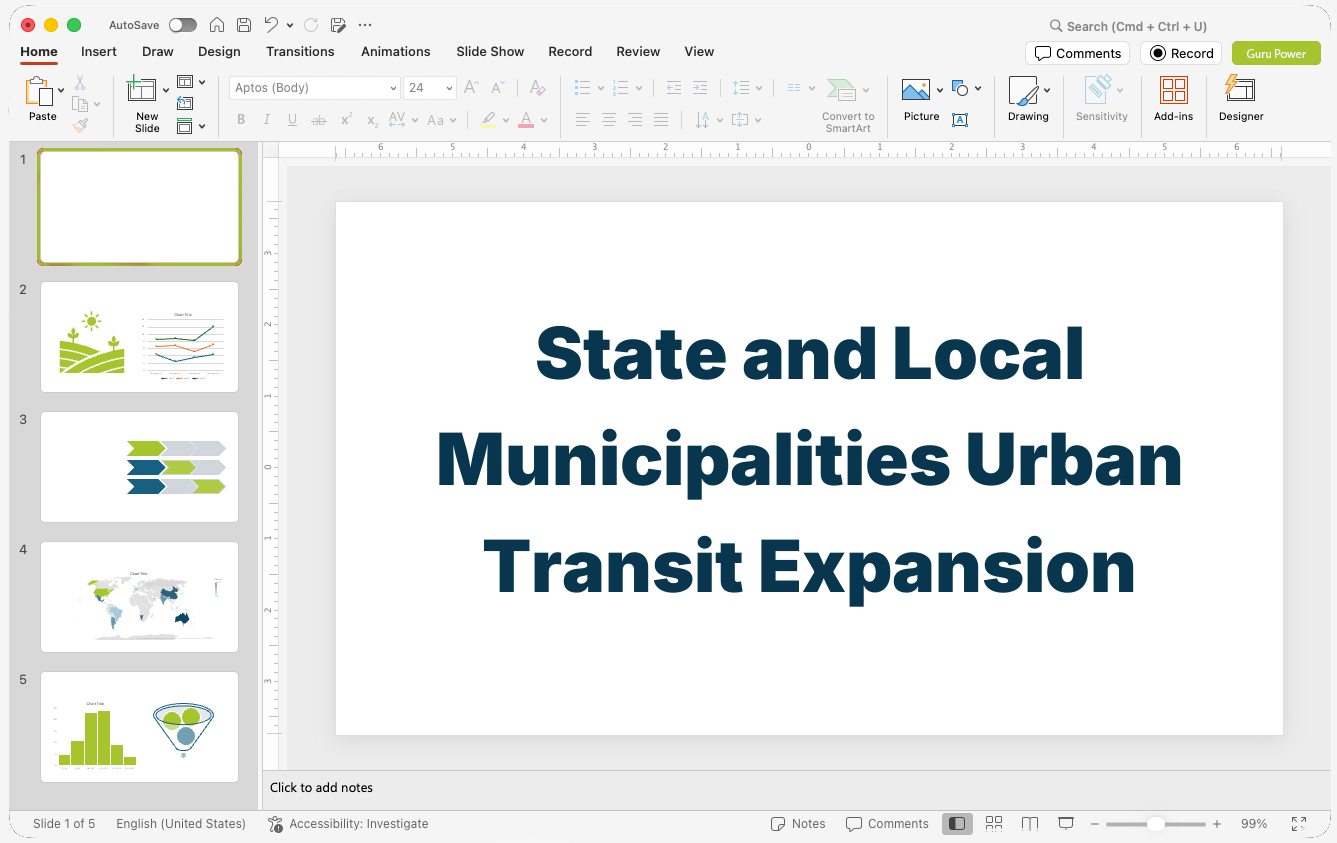
State and Local Municipalities Urban Transit Expansion Pitch-Deck
Primary Audience: Federal Transit Administration Grant Officers and Regional Planning Authorities.
Purpose: Secure federal grant matching funds for public transportation projects.
Description: This Pitch-Deck details ridership forecasts, route mapping, and environmental sustainability benefits for municipal transit projects. The problem is urban congestion, and this deck frames expansion as an essential economic driver. High-contrast route diagrams support the grant application strategy.
Public Sector Inter-Agency Data Sharing PowerPoint
Primary Audience: State Chief Data Officers, Agency IT Directors, and Governance Boards.
Purpose: Establish unified data governance frameworks and inter-agency integration protocols.
Description: This PowerPoint presentation maps data integration architectures, privacy protocols, and agency access controls. Visual workflow diagrams explain security compliance measures and data exchange pathways. The structured content drives consensus among disparate administrative departments.
Civil Infrastructure Agencies Smart City Initiative Slide-Deck
Primary Audience: Municipal Steering Committees, Technology Vendors, and Public Policy Groups.
Purpose: Propose IoT and smart grid infrastructure deployments across urban centers.
Description: This Slide-Deck highlights traffic management sensors, public Wi-Fi networks, and automated municipal utilities. Strategic ROI frameworks articulate long-term cost savings and improved civic services. The visual narrative demonstrates actionable integration across municipal departments.
Regulatory Bodies Workforce Development Program Presentation
Primary Audience: State Labor Boards, Vocational Education Leaders, and Regional Employer Alliances.
Purpose: Secure state funding for job retraining and workforce grant programs.
Description: This PowerPoint presentation presents labor market skill gaps, training completion statistics, and employer placement ratios. Bar charts and demographic maps illustrate regional employment needs. The deck bridges government funding requests with measurable workforce development outcomes.
Your PowerPoint, Google Slide and KeyNote Strategy, Story and Design Professionals
Presentation Gurus addresses the exact visual and structural demands of public sector communications. We combine visual storytelling, standardized brand compliance, and rigorous content structuring to ensure every slide deck conveys authority and clarity. Our team transforms dense technical documentation into clean graphics, executive dashboards, and transparent timelines that keep oversight authorities focused on core outcomes. Partner with Presentation Gurus to elevate your agency communications and secure strategic alignment—contact our team today to schedule an initial consultation.
Ready ToGet Started?
Questions & Answers
Government Agencies (Federal, State, Local) Presentations FAQs
How does the collaboration process work?
Everything happens online. Every meeting is a Microsoft Teams call or similar virtual environment where we can share desktops and information in real time. Revision meetings and discovery calls are always scheduled in the morning, so by noon we can begin work on tasks for the next revision meeting.
Will our team receive the fully editable source file?
Yes. Unlike graphic designers who deliver flat PDFs or JPEGs, Presentation Gurus delivers the native, fully editable presentation file (.pptx, .key, etc.) so your team can make last-minute text edits on the fly, or update the presentation later as details change.
What does Government Agencies (Federal, State, Local) Presentations presentation design cost?
Pricing is simple and clear. A basic slide design or redesign begins at $49 per slide. Premium presentation design, which includes copywriting and basic storytelling, starts at $79 per slide. Custom presentations involving strategy, copywriting and custom graphics are quoted based on your specifications. See complete pricing details here.
Can you design presentations that comply with Section 508 accessibility guidelines?
Yes. The data shows that public sector documents must meet statutory accessibility standards. We design slides with proper color contrast ratios, clear typography hierarchies, and screen-reader-friendly structure to ensure full accessibility compliance.
How do you handle security and compliance requirements for public sector presentations?
We adhere to strict data handling procedures and non-disclosure protocols. Content can be anonymized or sanitized prior to design, and all file transfers follow secure, encrypted workflows suitable for public sector operational standards.
How does professional slide design help during legislative budget hearings?
Legislative committees review hundreds of line items under strict time constraints. A strategy-led visual layout highlights key fiscal allocations, program milestones, and ROI metrics, allowing lawmakers to process technical proposals quickly.
How long does it take to get a presentation designed?
If your team needs a complete presentation by 9:00 AM the next day, we can meet that deadline. Most projects take 10 – 15 days, providing we have all the information. Pricing is also based on slide complexity and speed — a basic slide deck with a 15-day delivery costs much less than a premium slide deck delivered the next morning.
We have sensitive business information. Can you work under an NDA?
Virtually all of our client work is done under an NDA. We have a basic NDA included with our presentation work order, plus an enhanced, expanded non-disclosure agreement available whenever a project calls for it.
What is the typical turnaround time for an agency briefing deck?
Standard turnaround ranges from 5 to 10 business days depending on slide volume and data complexity. Expedited delivery schedules are available to support urgent congressional or gubernatorial reporting deadlines.
Does our industry need a Presentation or a Pitch Deck?
The terms are frequently used interchangeably, but they serve different strategic purposes. A pitch deck is a highly visual, persuasive tool designed to secure a strategic commitment or investment. A standard presentation is an informative, detailed document structured to align stakeholders and share data.
Presentation Gurus' research identifies 13 locations with active Government Agencies (Federal, State, Local) operations, including Washington, DC, Sacramento, CA, and Austin, TX.
Public sector initiatives depend on clear communication across every tier of civil service. Federal operations maintain their primary base in Washington, DC, where executive departments and legislative bodies set national policy. This concentration defines corridors like NoMa and Capitol Hill throughout the District of Columbia. Outside the capital, regional hubs translate these federal directives into daily practice. Denver, CO serves as a key western center housing regional offices for the Department of the Interior. Public health priorities are anchored in Atlanta, GA through the Centers for Disease Control and Prevention alongside regional administrative centers. Meanwhile, Baltimore, MD directs vast domestic programs as the headquarters for the Social Security Administration and the Centers for Medicare & Medicaid Services. Specialized procurement and aerospace missions also run through Huntsville, AL, home to both the NASA Marshall Space Flight Center and Army Materiel Command.
State-level administration addresses distinct regional priorities and manages massive public resources. In Sacramento, CA, agencies oversee the country’s largest state budget. A similar administrative scale directs transportation, education, and regulatory oversight from Austin, TX, while Albany, NY houses executive administrative offices, state authorities, and regulatory bodies. Moving to the southeast, Tallahassee, FL directs extensive health, environmental, and infrastructure administration. In Richmond, VA, state agencies manage court systems and public safety networks across the Commonwealth. In the Midwest, Columbus, OH balances state administration with regional municipal governance hubs. Further west, Springfield, IL directs agricultural, transit, and human services agencies, anchoring Sangamon County’s public-sector economy across Illinois. Rapid growth in Phoenix, AZ places state agencies at the forefront of municipal planning, transit, and water resource management. Public administration also sustains regional employment across rural states, such as Wyoming, where state agencies represent leading employers in Laramie County.
These civic bodies frequently coordinate with outside partners to deliver programs, share research, and train staff. Agency teams often partner with Defense & Military Organizations on joint security and logistics initiatives. Complex technical projects involve ongoing collaboration with Scientific Research Institutes & National Labs and Higher Education Institutions (Universities & Colleges). On community initiatives, public managers work alongside Non-Profit Organizations (NPOs) & NGOs and coordinate local priorities with K-12 School Districts & Private Schools. Preparing the civic workforce also requires steady alignment with Vocational & Technical Training Centers and programs managed by Corporate Training & Executive Education. Finally, regulatory updates and policy briefings often bring agency staff together with representatives from Trade Associations & Industry Coalitions. In every context, clear visual assets developed with a dedicated presentation design agency help agencies explain detailed policy, report on progress, and engage the public.