
Strategic Presentations Built for Vocational & Technical Training Centers Decision-Makers and Boards
Vocational & Technical Training Centers Presentation Design is a specialized service that restructures complex workforce development metrics, trade curricula, and institutional budgets into executive-ready slides tailored for board members, municipal partners, and corporate sponsors.
Presentation Gurus serves as a dedicated design partner for vocational and technical training centers seeking to elevate their communication output. We build custom pitch deck materials for employer partnerships, comprehensive trade school board decks, and detailed technical institute grant proposals. The market requires educational leadership to communicate clearly with municipal authorities, corporate sponsors, and accreditation boards. Whether you need an overhauled slide deck for upcoming budget hearings, a strategic presentation for regional workforce alignment, or a crisp PowerPoint slide narrative to secure equipment donations, our team structures your content to deliver maximum business impact.
Why Vocational & Technical Training Centers Presentations Need Professional Presentation Design
Vocational and technical training centers frequently rely on fragmented templates that obscure operational outcomes and performance metrics. Standard presentations often fail to align corporate board expectations with technical curriculum requirements, leading to delayed capital allocations and lost employer partnerships. A strategy-led approach changes this narrative by restructuring technical frameworks into logical business cases. Visual clarity replaces dense text, ensuring that accreditation metrics, completion rates, and capital expenditure requests are clear. When training centers present data through structured, visual narratives, stakeholders evaluate performance faster. The measurable outcome is increased board alignment, streamlined grant approval processes, and accelerated partnership agreements.
How Working With Us Works
From First Conversation To Finished Deck
Company
Meet JR, our founder. Fortune 500s, SMBs, startups — he’s built presentations for all of them with his team for the past 30 years, and he’s ready to build yours.
Service
Find your fit. We match the right service and scope to your audience, your goals, and your deadline, from 24-hour service to a 15-day turnaround.
Cost
Know the number upfront. Transparent, flat pricing before we start — no surprises, no hidden hours. All from $49 per slide.
Call 480-386-6000
Call us now. We’re open and we answer the phone. Or complete our quote request form that takes less than two minutes.















12 Essential Presentation Types for Vocational & Technical Training Centers
Trade School Employer Partnership Pitch-Deck
Primary Audience: Corporate HR executives and regional industrial employers.
Purpose: Secure student apprenticeship placements and corporate hiring commitments.
Description: This presentation outlines talent pipeline models and custom training capabilities for regional employers. The slide content emphasizes graduate job-readiness, technical certifications, and co-developed lab curricula. Visual layouts map student learning paths directly to employer skill gaps. The deck establishes clear financial and operational advantages for corporate hiring partners.
Technical Institute Annual Board Slide-Deck
Primary Audience: Institutional board of directors and executive leadership.
Purpose: Gain approval for annual operational budgets and strategic initiatives.
Description: This presentation summarizes fiscal year financial performance, student retention metrics, and capital expenditure needs. Structured slides present complex department budgets alongside completion statistics and accreditation updates. Data charts highlight enrollment trends against administrative overhead costs. Executives use this deck to drive rapid consensus on strategic growth priorities.
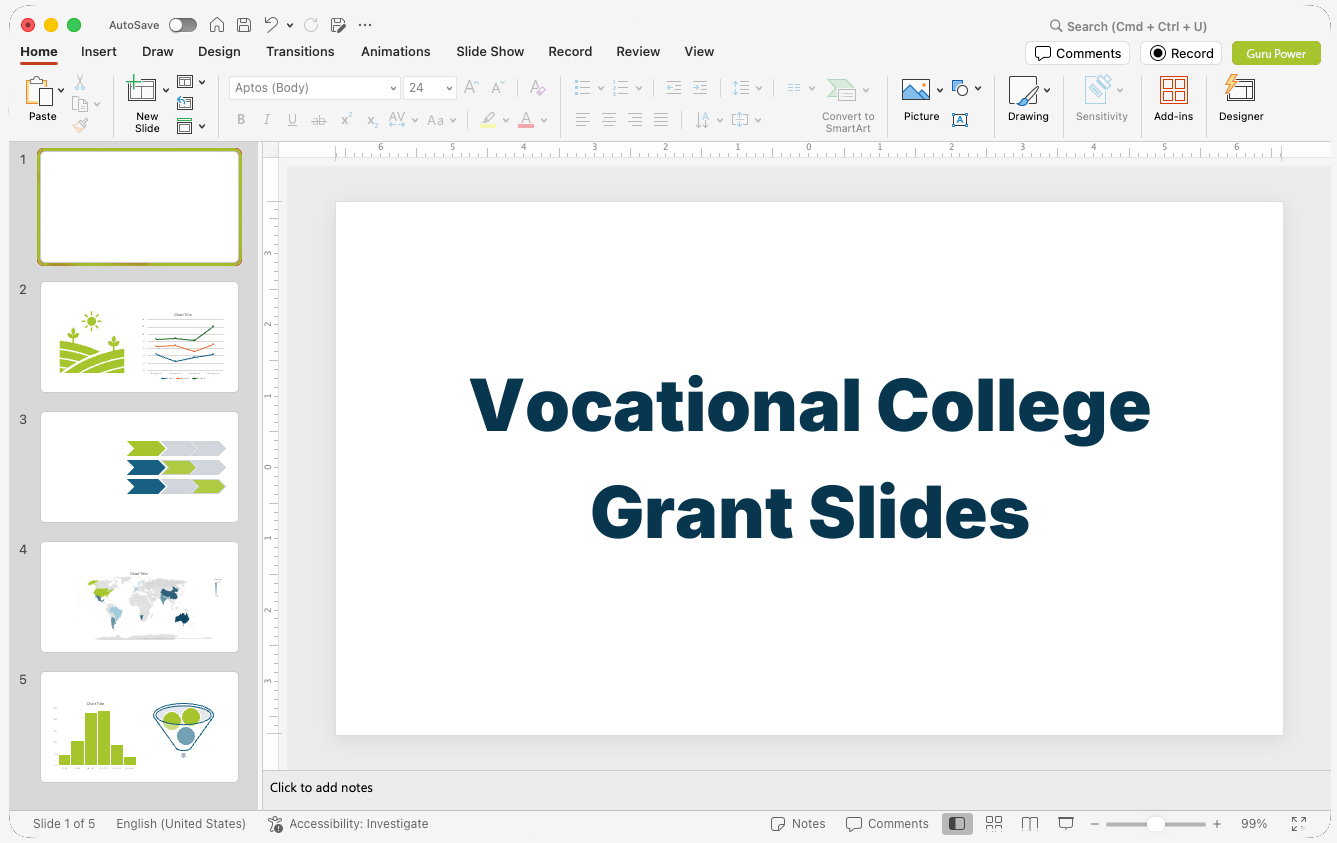
Vocational College Grant Proposal Slides
Primary Audience: State workforce boards, federal grant reviewers, and private foundations.
Purpose: Secure public and private funding for facility upgrades and tuition subsidies.
Description: This deck translates complex grant applications into executive visual summaries. Slides detail regional labor shortages, targeted demographic impacts, and detailed budget allocations. Visual frameworks display project milestones, equipment costs, and measurable workforce outcomes. The presentation provides reviewers with clear proof of regional economic return.
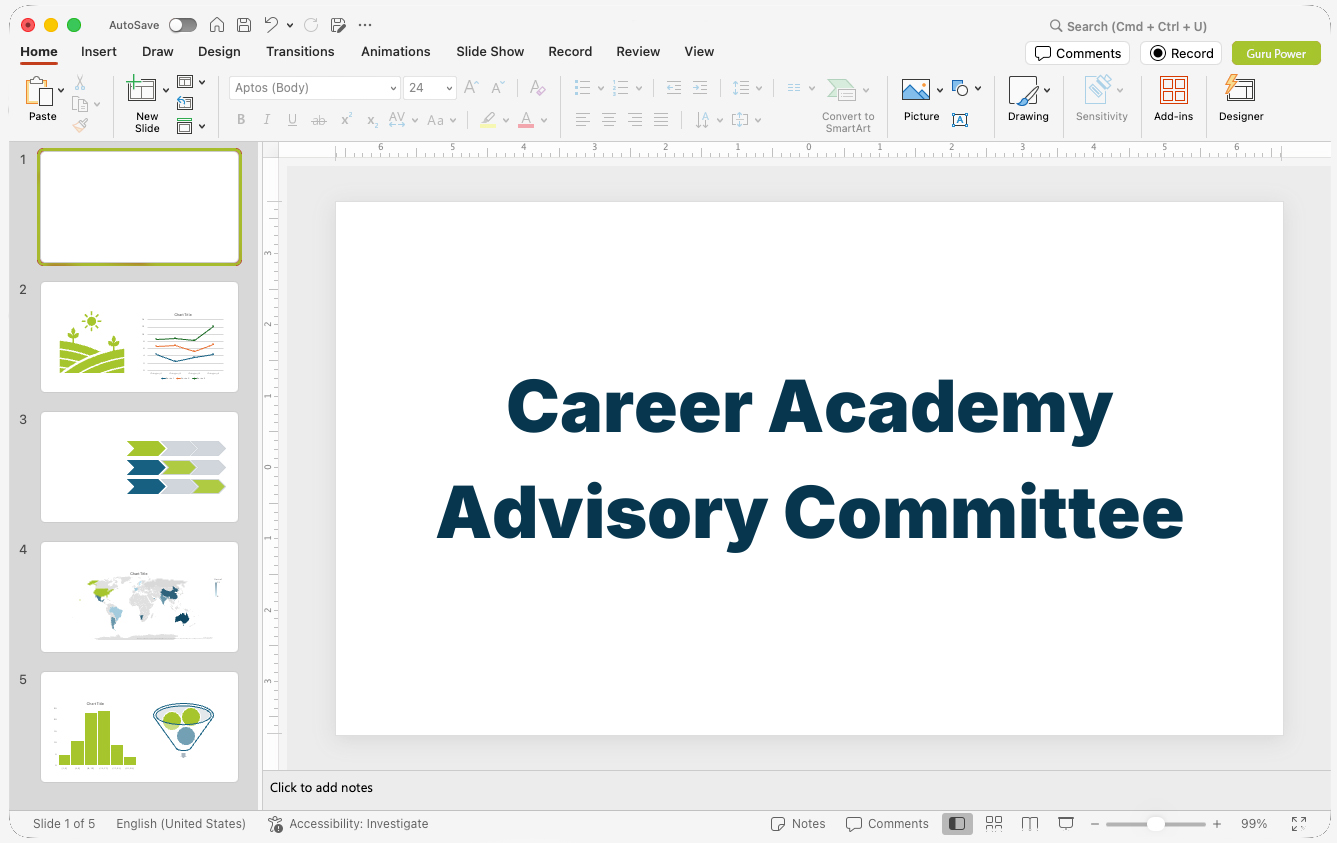
Career Academy Advisory Committee Presentation
Primary Audience: Industry advisory board members and trade association leads.
Purpose: Validate curriculum relevance against current industry technology trends.
Description: This presentation details proposed course updates, lab safety standards, and technical certification pathways. Slides highlight gaps between current training software and active job market requirements. Visual diagrams contrast existing lab configurations with proposed industrial upgrades. The deck solicits actionable guidance and formal endorsement from industry leaders.
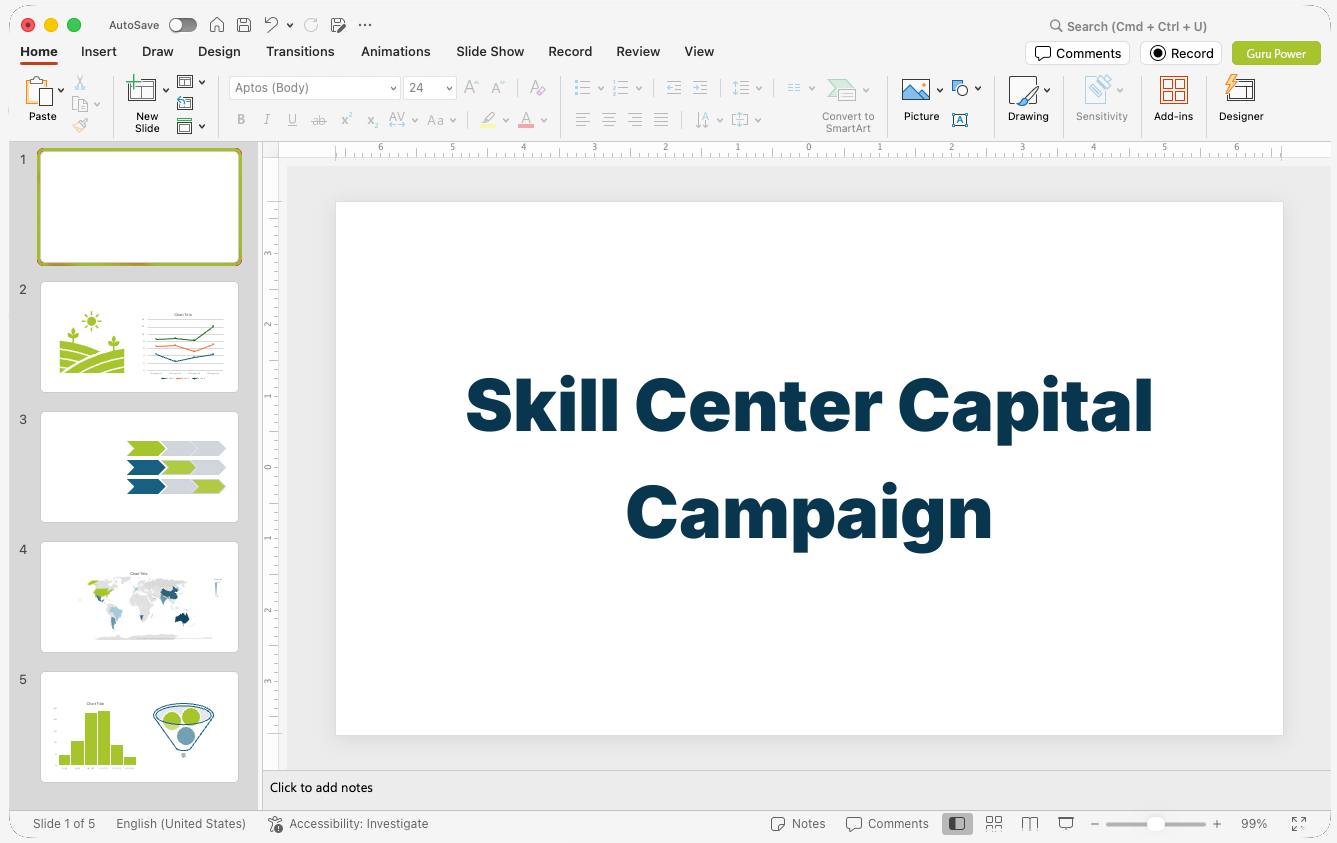
Skill Center Capital Campaign Pitch-Deck
Primary Audience: High-net-worth donors, philanthropic funds, and civic leaders.
Purpose: Raise capital funds for facility expansions and new machinery suites.
Description: This deck presents architectural plans, funding tiers, and community impact projections for facility growth. Visual slides display render designs of modern workshop spaces alongside labor market projections. Structured financial slides illustrate naming rights, equipment sponsorship levels, and long-term endowment plans. The presentation demonstrates clear civic and economic ROI for major donors.
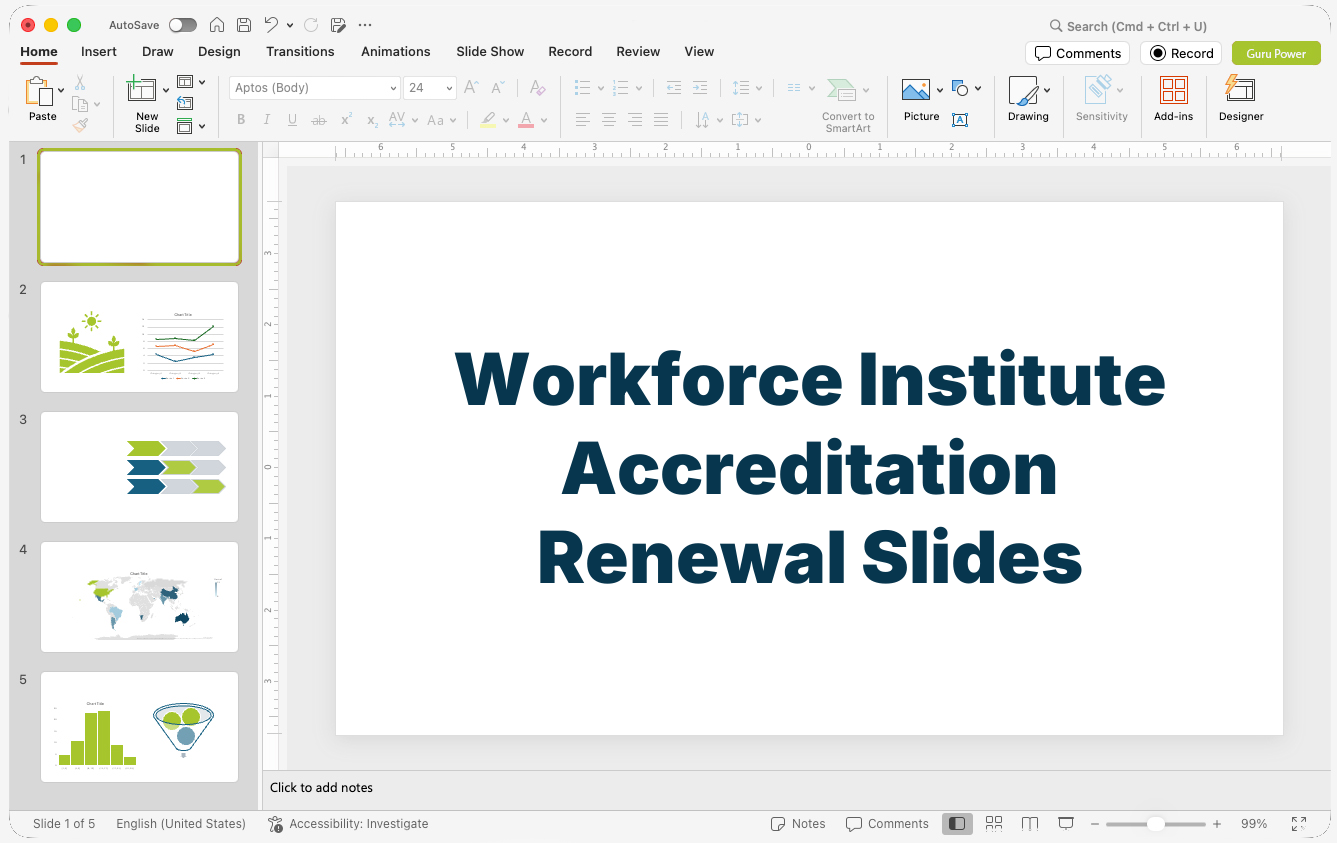
Workforce Institute Accreditation Renewal Slides
Primary Audience: Accreditation agency evaluators and compliance officers.
Purpose: Demonstrate compliance with national educational and safety standards.
Description: This presentation outlines instructional quality metrics, faculty credentials, and facility safety compliance. Slides organize detailed audit documentation into digestible, logical visual sections. Charts verify student contact hours, placement audit reports, and lab maintenance schedules. The presentation ensures evaluators navigate complex institutional data efficiently.
Industrial Training Facility Equipment Donation Presentation
Primary Audience: Industrial machinery manufacturers and hardware distributors.
Purpose: Secure donated or discounted heavy equipment and software licenses.
Description: This deck demonstrates how manufacturer equipment integration builds brand loyalty among incoming technicians. Visual slides display current lab layouts and outline student exposure metrics for sponsored machinery. Financial frameworks show tax deduction benefits paired with marketing visibility inside training labs. The deck positions equipment donations as a direct workforce investment strategy.
Trade School Program Expansion PowerPoint
Primary Audience: Internal faculty, department heads, and academic deans.
Purpose: Align institutional teams on the launch of new technical certificate programs.
Description: This presentation details market demand data, faculty recruitment plans, and required instructional investments. Visual roadmaps illustrate program launch timelines, enrollment targets, and classroom resource allocations. Financial slides show break-even timelines based on projected tuition revenue. The deck establishes clear operational milestones across academic departments.
Technical Institute Community College Articulation Slide-Deck
Primary Audience: Community college academic deans and credit transfer officers.
Purpose: Establish dual-enrollment and credit transfer agreements between institutions.
Description: This deck compares technical course frameworks with associate degree requirements to justify transfer credits. Visual course mapping slides detail lab hours, learning objectives, and prerequisite alignment. Operational slides outline administrative workflows for student transcript processing. The presentation eliminates friction during credit evaluation negotiations.
Vocational College Student Recruitment Presentation
Primary Audience: High school counselors, prospective students, and parents.
Purpose: Drive student admissions and enrollment in high-demand trade programs.
Description: This presentation showcases career outcomes, starting salaries, and hands-on learning environments. Visual slides contrast traditional degree debt with rapid, low-cost vocational certification paths. Dynamic graphics illustrate graduate career trajectories in specialized industrial fields. The deck gives prospective applicants clear facts regarding career placement success.
Career Academy Municipal Economic Alignment Pitch-Deck
Primary Audience: City council members and local economic development agencies.
Purpose: Secure municipal land allocations and tax incentive packages.
Description: This deck aligns training center capacity with municipal economic development target sectors. Visual slides demonstrate local job creation metrics, corporate attraction statistics, and tax base impacts. Maps highlight campus accessibility, public transit integration, and regional labor draw. The presentation gives public officials compelling data to justify local municipal support.
Skill Center Safety & Compliance Operational Slides
Primary Audience: Facility managers, shop instructors, and risk management officers.
Purpose: Standardize workshop safety protocols and reduce campus liability incidents.
Description: This presentation outlines updated OSHA guidelines, equipment maintenance protocols, and incident reporting procedures. Clear visual icons and workflow diagrams explain safety audit steps and emergency procedures. Standardized slides ensure shop instructors deliver consistent safety briefings across all technical programs. The deck creates an auditable record of operational risk management.
Your PowerPoint, Google Slide and KeyNote Strategy, Story and Design Professionals
Presentation Gurus eliminates visual noise and structural confusion from technical education materials. We translate complex training frameworks, lab expansion schedules, and graduate placement data into cohesive visual stories aligned with your institutional brand. Our designers balance rigorous formatting with clear data architecture to keep stakeholders focused on core strategic metrics. When you need a polished pitch deck or an executive-ready presentation, we deliver precise design under strict deadlines. Contact Presentation Gurus today to discuss your next slide deck project and transform your technical data into a strategic institutional asset.
Ready ToGet Started?
Presentation Gurus is open.
Give us a call.
We actually answer the phone.
Questions & Answers
Vocational & Technical Training Centers Presentations FAQs
How does the collaboration process work?
Everything happens online. Every meeting is a Microsoft Teams call or similar virtual environment where we can share desktops and information in real time. Revision meetings and discovery calls are always scheduled in the morning, so by noon we can begin work on tasks for the next revision meeting.
How long does a slide overhaul take for vocational college presentations?
Most vocational presentation projects take between two to three weeks depending on slide count, data complexity, and review cycles. Standard turnaround includes discovery, structural outline, visual design execution, and institutional brand alignment.
What does Vocational & Technical Training Centers Presentations presentation design cost?
Pricing is simple and clear. A basic slide design or redesign begins at $49 per slide. Premium presentation design, which includes copywriting and basic storytelling, starts at $79 per slide. Custom presentations involving strategy, copywriting and custom graphics are quoted based on your specifications. See complete pricing details here.
How long does it take to get a presentation designed?
If your team needs a complete presentation by 9:00 AM the next day, we can meet that deadline. Most projects take 10 – 15 days, providing we have all the information. Pricing is also based on slide complexity and speed — a basic slide deck with a 15-day delivery costs much less than a premium slide deck delivered the next morning.
Does our industry need a Presentation or a Pitch Deck?
The terms are frequently used interchangeably, but they serve different strategic purposes. A pitch deck is a highly visual, persuasive tool designed to secure a strategic commitment or investment. A standard presentation is an informative, detailed document structured to align stakeholders and share data.
How does specialized presentation design help trade schools secure corporate equipment sponsorships?
Corporate sponsors evaluate trade schools on workforce alignment, equipment utilization, and graduate output. Strategy-led presentation design translates technical lab requirements into clear corporate ROI metrics. Presenting structured student placement data and employer partnership benefits in a visual slide deck accelerates sponsorship approvals.
Why should technical institutes hire an external design firm for board presentations?
Internal staff often lack the bandwidth or design expertise to condense massive compliance, budget, and operational datasets into executive-level visual stories. External presentation experts bring objective structural clarity, ensuring trade school board decks prioritize high-level decisions over granular operational distraction.
We have sensitive business information. Can you work under an NDA?
Virtually all of our client work is done under an NDA. We have a basic NDA included with our presentation work order, plus an enhanced, expanded non-disclosure agreement available whenever a project calls for it.
Can custom pitch decks improve grant approval rates for technical training centers?
Yes. Grant review committees evaluate regional workforce impact, budgetary feasibility, and long-term sustainability. Restructuring dense narrative grant proposals into clean visual presentations highlighting key ROI metrics, target completion rates, and community impact improves reviewer comprehension and trust.
Will our team receive the fully editable source file?
Yes. Unlike graphic designers who deliver flat PDFs or JPEGs, Presentation Gurus delivers the native, fully editable presentation file (.pptx, .key, etc.) so your team can make last-minute text edits on the fly, or update the presentation later as details change.
Presentation Gurus' research identifies 14 locations with active Vocational & Technical Training Centers operations, including Houston, TX, Pittsburgh, PA, and Chicago, IL.
Vocational and technical training centers play a critical role in developing hands-on talent across the country. In industrial powerhouses like Houston, TX, training facilities support the energy, petrochemical, and manufacturing sectors with clear curriculum decks and safety overviews. Meanwhile, institutes in Pittsburgh, PA focus on advanced manufacturing and robotics workforce skills. Strong manufacturing and transit demands also shape the technical academies across Chicago, IL, while the automotive and industrial centers in Detroit, MI rely on technical institute programs to prepare technicians for modernized assembly floors.
As specialized manufacturing sectors grow, community programs must explain their real impact to regional partners. In Phoenix, AZ, rapid semiconductor factory growth drives the construction of new career academies. Established production hubs in Cleveland, OH balance precision manufacturing instruction with dedicated healthcare vocational tracks. Similarly, Columbus, OH features an expanding technology footprint that requires specialized trade school partnership decks. In heavy machinery regions like Milwaukee, WI and the metals corridor in Birmingham, AL, technical programs help bridge the gap between heavy industrial facilities and modern workforce safety standards.
Logistics and supply chain networks also shape technical education. National trade associations and distribution hubs in Indianapolis, IN utilize logistics skill centers to train warehouse technicians. Further south, the busy freight lanes around Louisville, KY rely on automated systems training programs. Commercial construction and supply routes in Atlanta, GA connect to technical colleges across the region, matched by growing energy and construction career academies in Charlotte, NC. Along the coast, maritime training institutes in Baltimore, MD prepare workers for active port operations.
Institutions coordinating large operational shifts often consult strategic frameworks like the Shared Services Center Transition Deck to align administrative resources across multiple campuses. Trade schools also collaborate closely with neighboring fields, from K-12 School Districts & Private Schools building early career pipelines to Higher Education Institutions (Universities & Colleges) offering dual-credit paths. Research partnerships connect these campuses with Scientific Research Institutes & National Labs to introduce emerging tech into vocational classrooms.
Public and community alignment remains central to these technical initiatives. Many academies partner with Non-Profit Organizations (NPOs) & NGOs and Government Agencies (Federal, State, Local) to secure public workforce grants. Ongoing industry standards stem from active cooperation with Trade Associations & Industry Coalitions. At the same time, regional training centers work alongside Corporate Training & Executive Education providers and Defense & Military Organizations to build clear transition programs for technical recruits and industry veterans alike.