
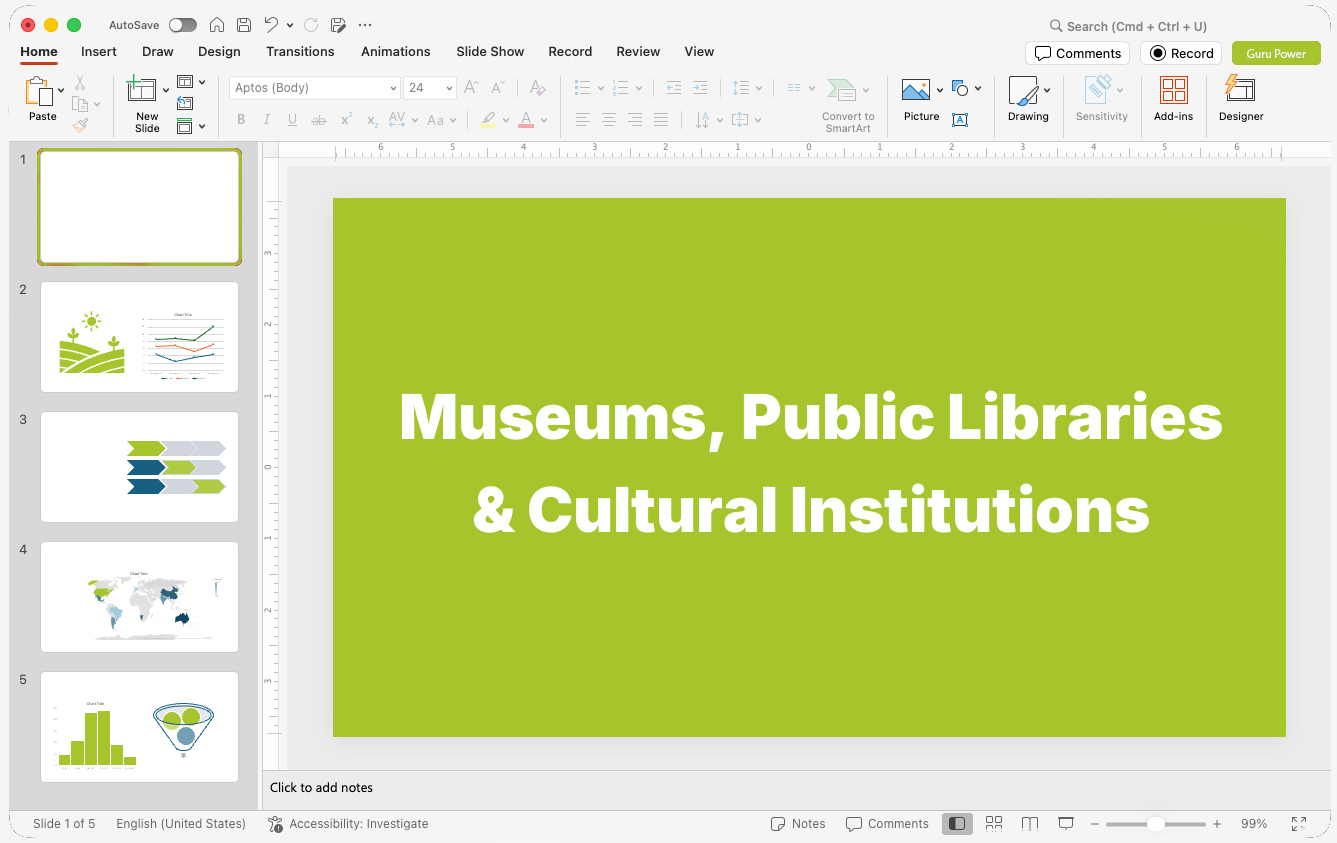
Strategy-Led Visual Communication for Public Library Systems, Historical Societies, and Museum Executives
Museums, Public Libraries & Cultural Institutions Presentation Design is the strategic structuring and visual execution of data-driven communication materials for public and non-profit cultural leaders presenting to boards, municipal authorities, grantors, and philanthropic donors.
Presentation Gurus provides visual strategy and slide deck design tailored specifically to public library systems, science centers, art museums, and historical sites. Institutional leaders encounter distinct challenges when presenting capital improvement projects, annual endowment performance, or community outreach programs to municipal councils and philanthropic foundations. We transform raw operational data, collection surveys, and architectural proposals into structured presentations that communicate financial stewardship and public value. Whether building an executive pitch deck for a major capital campaign, developing a board PowerPoint for annual budget allocation, or structuring a public presentation for municipal approval, our team aligns visual narrative with institutional objectives. We establish consistent slide hierarchy and data visualization frameworks that enable executive directors, curators, and development officers to brief stakeholders effectively.
Why Museums, Public Libraries & Cultural Institutions Presentations Need Professional Presentation Design
Museums, Public Libraries & Cultural Institutions operate under intense public scrutiny and complex fiscal models. Standard corporate deck templates fail because they lack the structure required to balance educational missions with fiscal sustainability. Executive directors and board chairs frequently attempt to communicate master plans, endowment strategies, and community impact reports using unstandardized visual materials. This approach obscures core messaging, extends review cycles, and jeopardizes donor confidence. Strategy-led presentation design restructures technical data, visitor statistics, and operational requirements into logical, audience-specific narratives. Visual information architecture clarifies resource allocation for municipal budget committees and highlights return on community investment for philanthropic boards. The market requires objective, data-driven visual frameworks that transform dense institutional documentation into actionable decision documents. The measurable outcome is faster governance approvals, increased capital campaign conversion rates, and unified stakeholder messaging across public and private sectors.
How Working With Us Works
From First Conversation To Finished Deck
Company
Meet JR, our founder. Fortune 500s, SMBs, startups — he’s built presentations for all of them with his team for the past 30 years, and he’s ready to build yours.
Service
Find your fit. We match the right service and scope to your audience, your goals, and your deadline, from 24-hour service to a 15-day turnaround.
Cost
Know the number upfront. Transparent, flat pricing before we start — no surprises, no hidden hours. All from $49 per slide.
Get Started
Tell us about your presentation project. It will take two minutes and we’ll get back to you on our next business day.











12 Essential Presentation Types for Museums, Public Libraries & Cultural Institutions
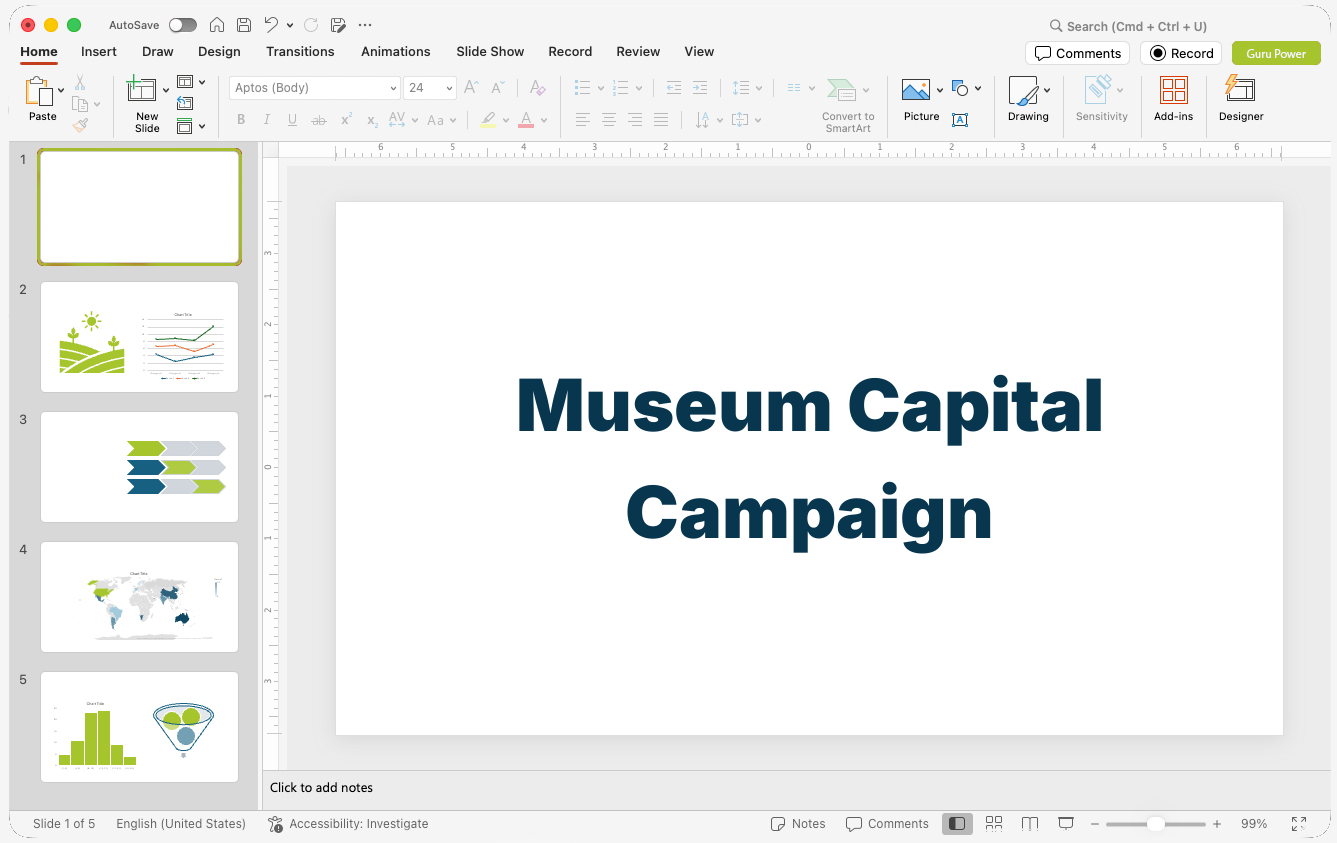
Museum Capital Campaign Pitch-Deck
Primary Audience: High-net-worth individual donors, philanthropic foundation trustees, and corporate sponsors..
Purpose: Secure multi-year financial commitments for facility expansion, endowment funds, or major collection acquisitions..
Description: This Museum capital campaign Pitch-Deck outlines the institution's long-term vision, architectural plans, and financial requirements. The presentation translates complex architectural blueprints and capital allocation models into clear visual milestones. Financial requirements are structured by giving tiers to show direct community impact. Detailed slides detail timeline execution and institutional sustainability.
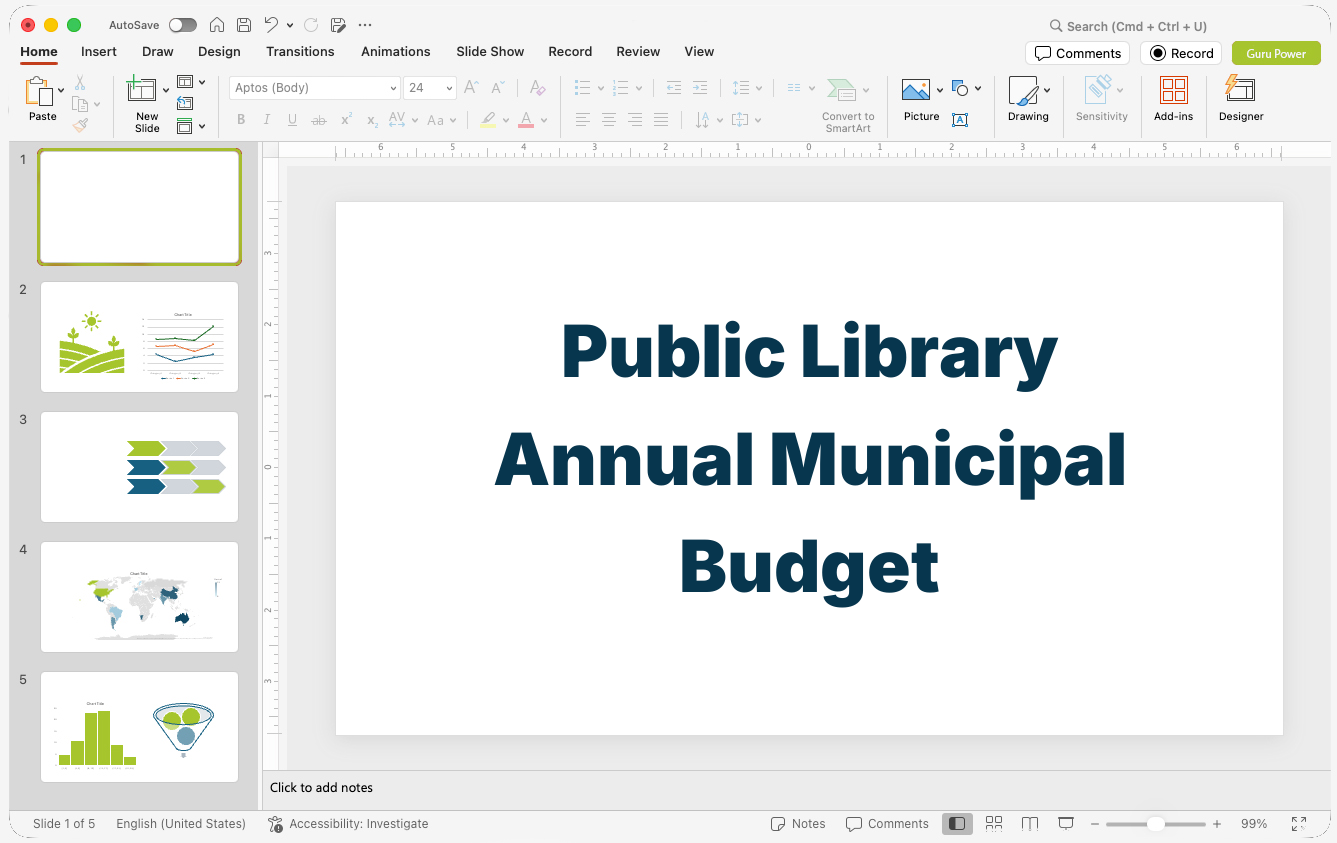
Public Library Annual Municipal Budget Presentation
Primary Audience: City council members, county commissioners, and municipal budget officers..
Purpose: Justify annual public funding requests and secure operational budget allocations for the fiscal year..
Description: This Public Library annual budget Presentation organizes operational costs, circulation data, and digital service metrics into an executive summary for public officials. The slide structure contrasts current funding levels against community usage statistics. Visual graphics highlight return on tax dollar investment across branch locations. Specific Slides outline essential facility maintenance and technology infrastructure upgrades.
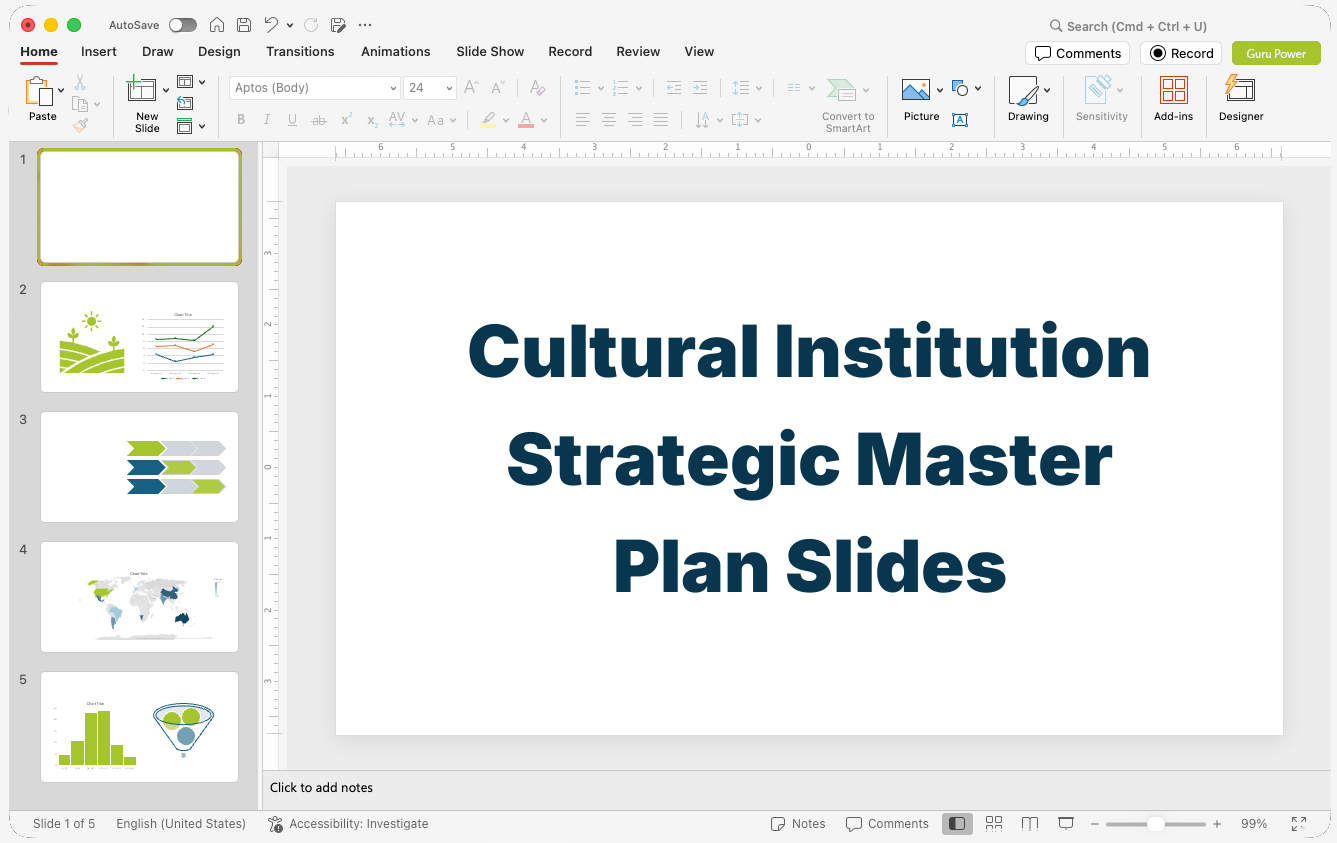
Cultural Institution Strategic Master Plan Slides
Primary Audience: Board of trustees, institutional advisory councils, and executive leadership..
Purpose: Align internal leadership on five-year strategic goals, operational priorities, and capital projects..
Description: These Cultural Institution strategic plan Slides present multi-year organizational priorities, visitor engagement forecasts, and financial projections. Complex operational timelines are formatted into legible gantt-style visual roadmaps. Key performance indicators are categorized by institutional department for quarterly tracking. The Slide-Deck establishes baseline metrics for measuring educational outreach and community accessibility.
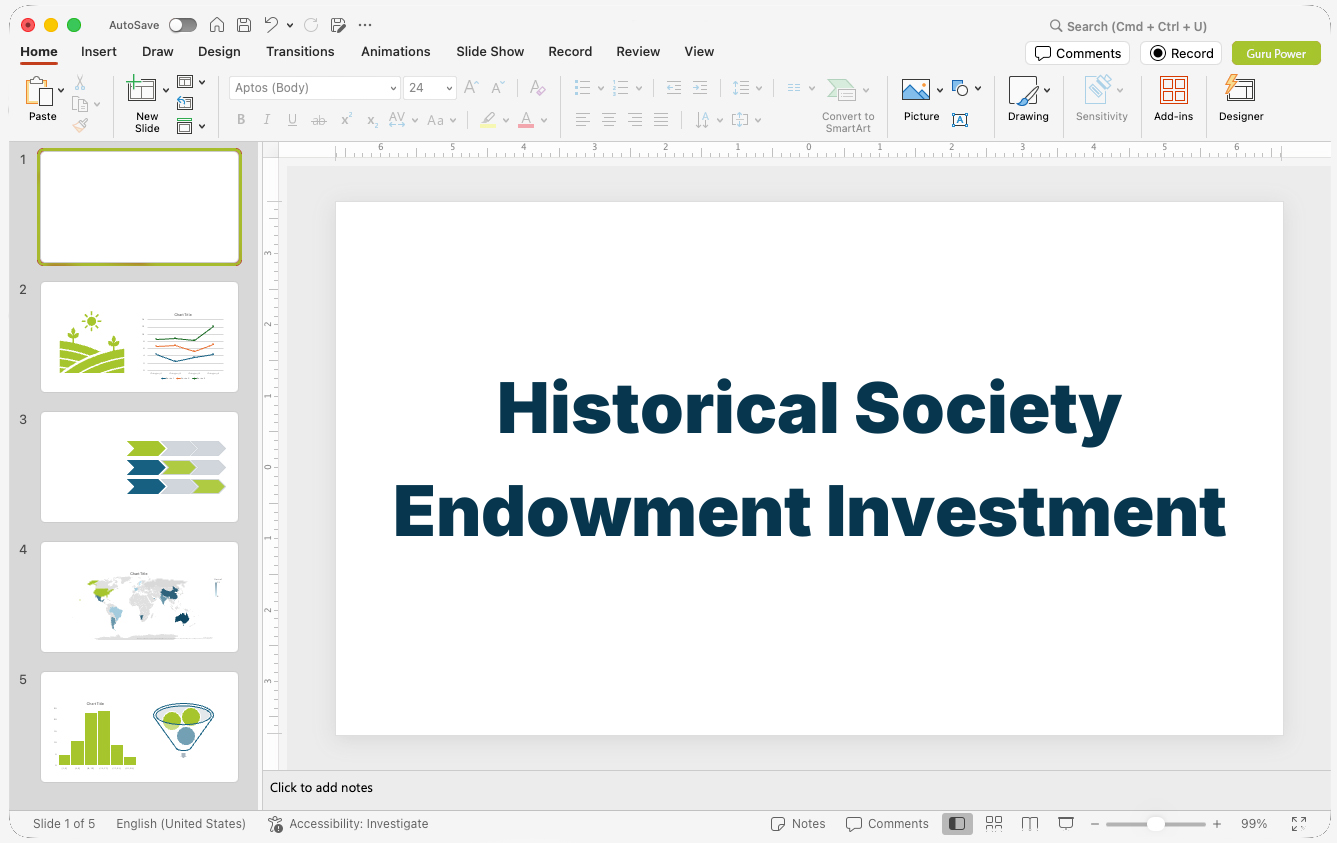
Historical Society Endowment Investment Presentation
Primary Audience: Finance committee members, institutional trustees, and wealth management advisors..
Purpose: Review portfolio performance, asset allocation, and expenditure policies to preserve financial sustainability..
Description: This Historical Society financial Presentation details fund performance, asset management strategies, and draw-rate compliance. Complex financial reporting is simplified into visual asset-allocation charts and cash-flow projections. Strategic Slides map portfolio returns against operational requirements for archival preservation. The presentation documents long-term fiscal health and risk mitigation strategies for board approval.
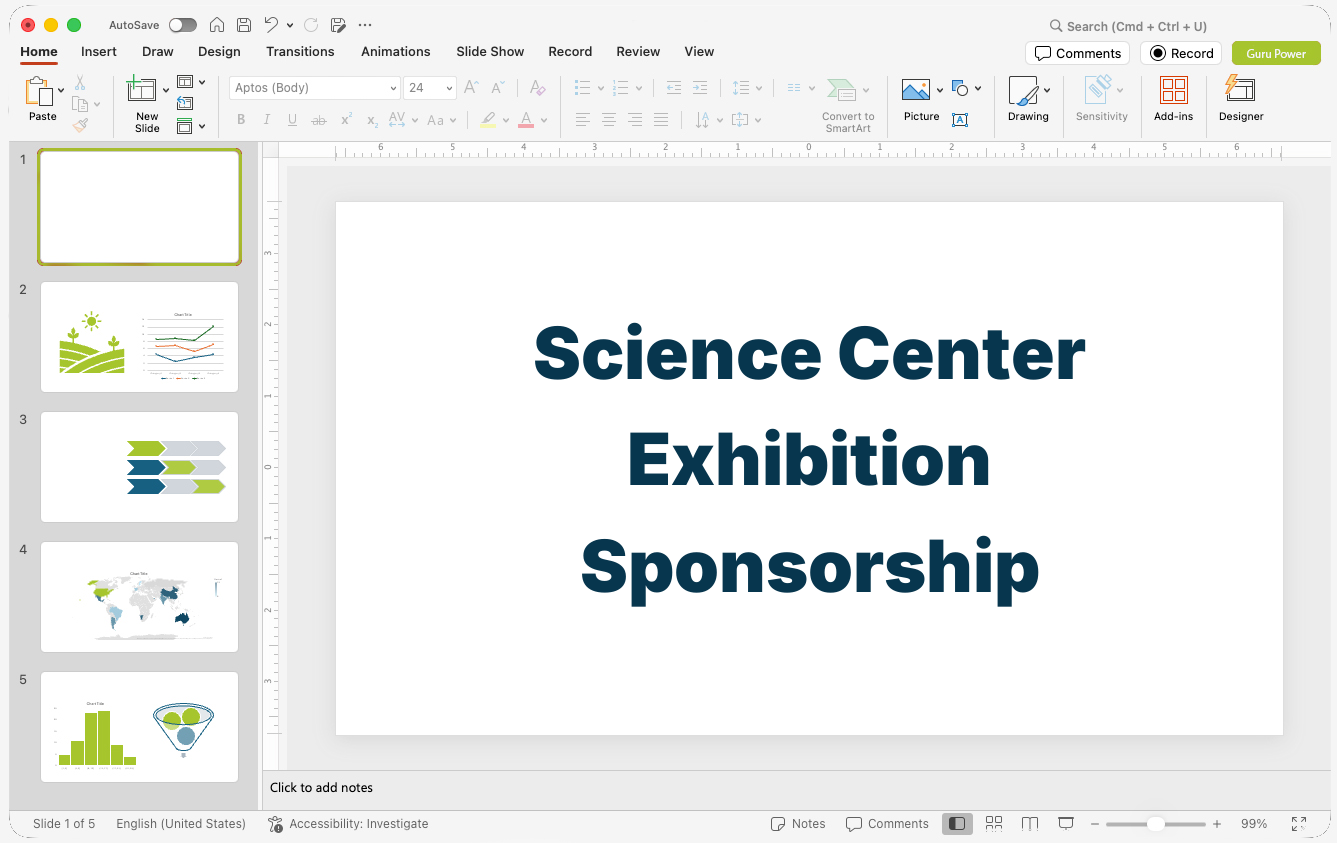
Science Center Exhibition Sponsorship Pitch-Deck
Primary Audience: Corporate philanthropy executives, brand partnership directors, and community foundations..
Purpose: Secure corporate sponsorship funding for traveling exhibitions or permanent interactive galleries..
Description: This Science Center sponsorship Pitch-Deck details visitor demographics, corporate branding placement, and community educational outcomes. The Slide-Deck maps target sponsor marketing goals against physical and digital exhibit spaces. Projected attendance metrics and media impressions are organized into comparative analytical slides. Funding tiers explicitly outline sponsor recognition benefits and community engagement touchpoints.
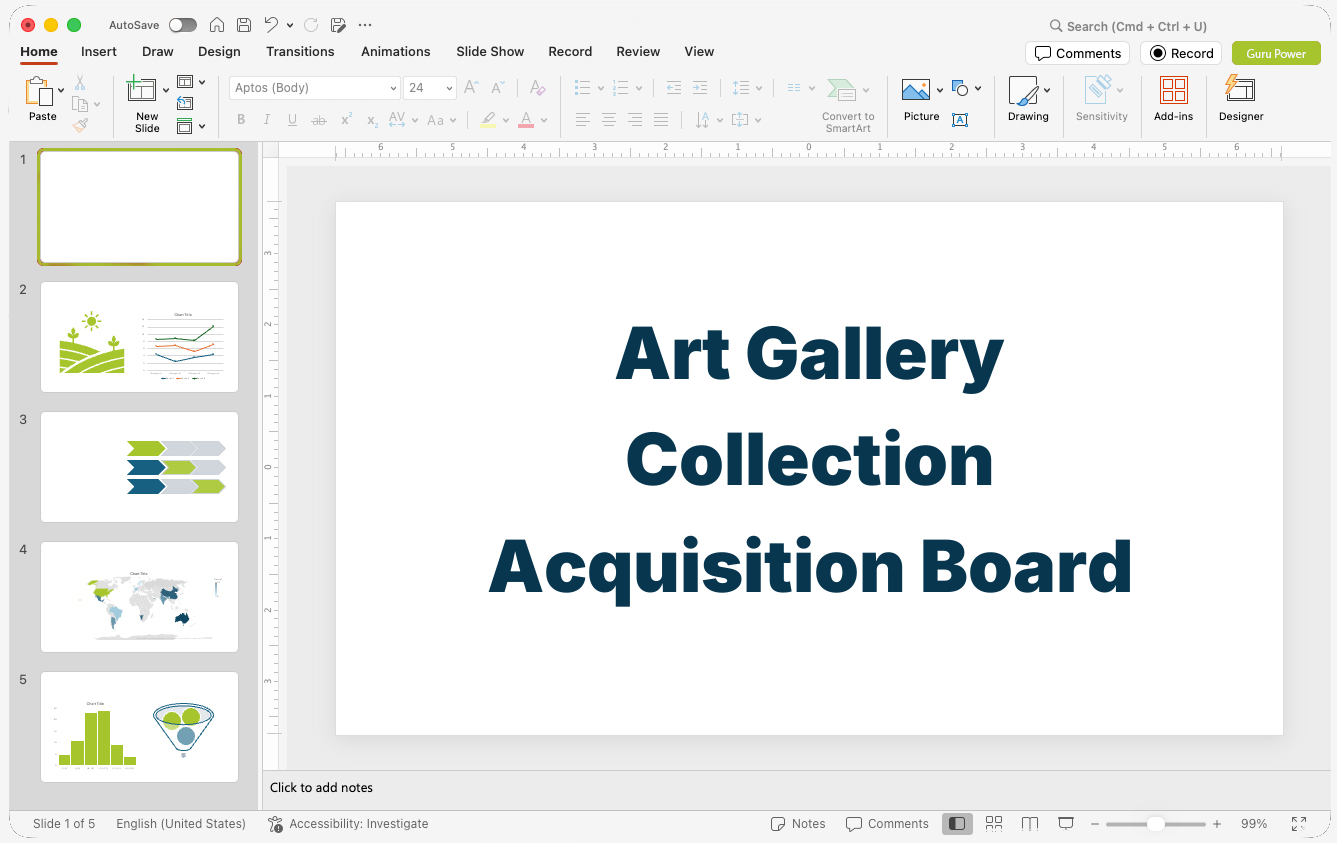
Art Gallery Collection Acquisition Board Presentation
Primary Audience: Acquisitions committee members, collection trustees, and major art donors..
Purpose: Obtain formal authorization and funding approval for new artwork acquisitions or deaccession proposals..
Description: This Art Gallery acquisition Presentation documents provenance, historical significance, valuation, and conservation requirements for prospective collection additions. Visual Slides compare the target artwork against existing collection strengths and curatorial goals. High-resolution imaging layouts display detailed condition reports and exhibition contexts. Financial Slides clarify purchase terms, donor restriction compliance, and long-term care costs.
Botanical Garden Facility Expansion Slide-Deck
Primary Audience: Zoning boards, municipal planning commissions, and regional environmental agencies..
Purpose: Obtain municipal zoning approvals, land-use permits, and public agency support for expansion projects..
Description: This Botanical Garden expansion Slide-Deck details site plans, environmental impact assessments, and projected visitor traffic shifts. Technical land-use data and site engineering diagrams are translated into structured visual layouts. Slides highlight ecological preservation measures and municipal infrastructure integration. Community impact metrics demonstrate alignment with city master plans and sustainability goals.
Heritage Site Historic Preservation Grant Presentation
Primary Audience: State historic preservation officers, federal grant review panels, and foundation officers..
Purpose: Secure competitive state and federal historic preservation grant funding for structural restoration..
Description: This Heritage Site grant Presentation details architectural degradation, historic significance, and precise structural remediation plans. Visual Slides incorporate architectural line drawings, historical photographs, and engineering surveys. Detailed budget Slides break down cost estimates by trades, materials, and compliance standards. The presentation demonstrates matching fund commitments and institutional execution capacity.
Museum Educational Outreach Community Slides
Primary Audience: School district administrators, educational board members, and public grant coordinators..
Purpose: Establish formal K-12 educational partnerships and secure funding for student field trip transportation..
Description: These Museum educational program Slides demonstrate curriculum alignment, student participation statistics, and measurable learning outcomes. The Slide-Deck maps exhibit content directly to state academic standards. Infographic layouts summarize school district reach, low-income school participation rates, and grant-subsidized admission data. Structured operational Slides lay out scheduling, safety protocols, and transportation logistical plans.
Public Library Digital Inclusion Initiative Pitch-Deck
Primary Audience: Federal telecommunications grantors, technology foundation officers, and corporate donors..
Purpose: Secure capital and grant funding for public broadband expansion, hardware lending programs, and tech literacy..
Description: This Public Library digital initiative Pitch-Deck presents community connectivity gaps, device distribution plans, and training program curricula. Data charts display local broadband deficit statistics alongside library branch access figures. The presentation outlines hardware procurement, maintenance life cycles, and technical support staffing. Outcome Slides quantify skill acquisition, job search utilization, and public technology access milestones.
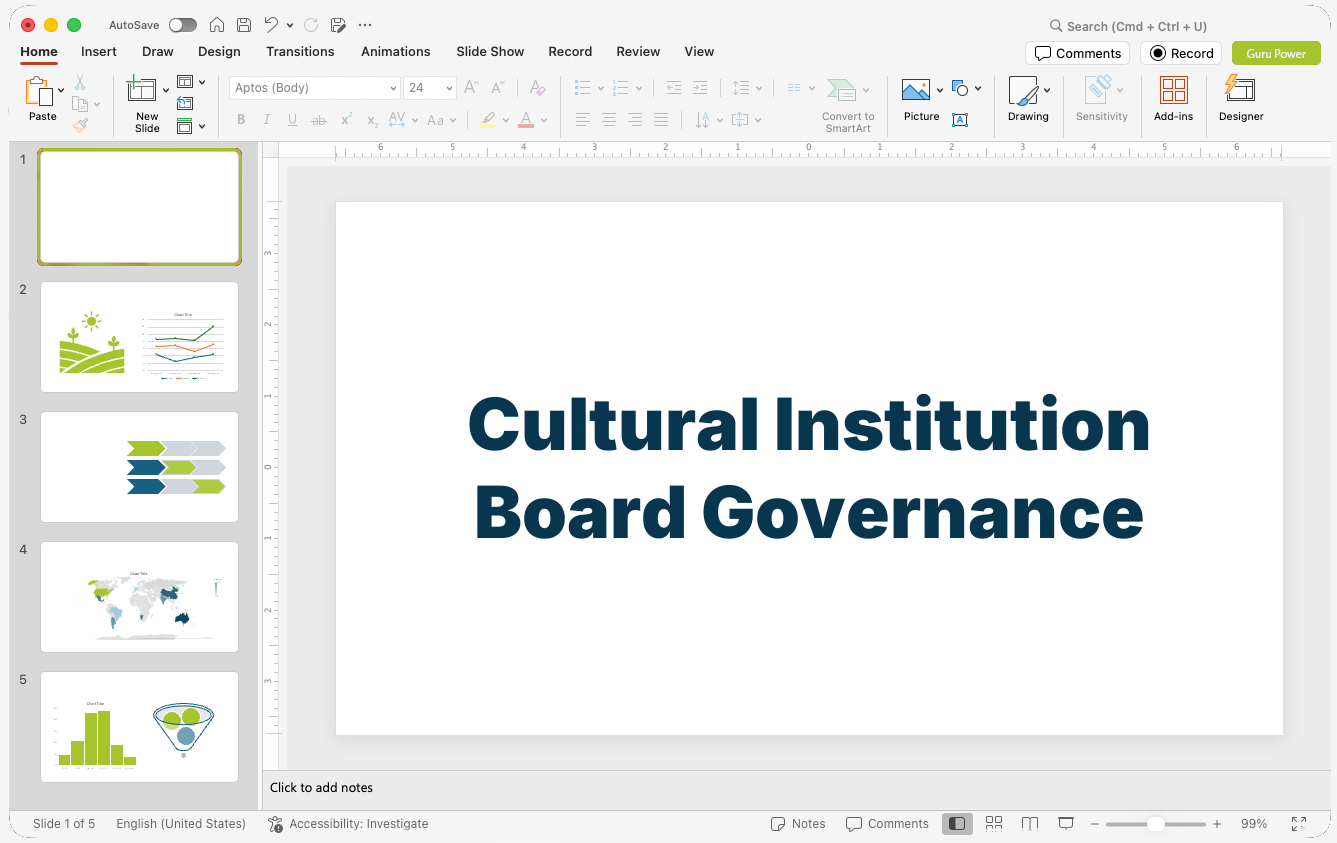
Cultural Institution Board Governance Presentation
Primary Audience: Newly appointed board members, executive committee chairs, and governance committees..
Purpose: Orient incoming trustees on institutional policies, legal fiduciary duties, and strategic priorities..
Description: This Cultural Institution governance Presentation outlines committee structures, operational policies, conflict of interest guidelines, and trustee expectations. Visual organizational charts detail administrative reporting lines and volunteer leadership roles. Strategic Slides summarize current fiscal health, master plan status, and institutional liability coverage. The presentation standardizes trustee onboarding across administrative departments.
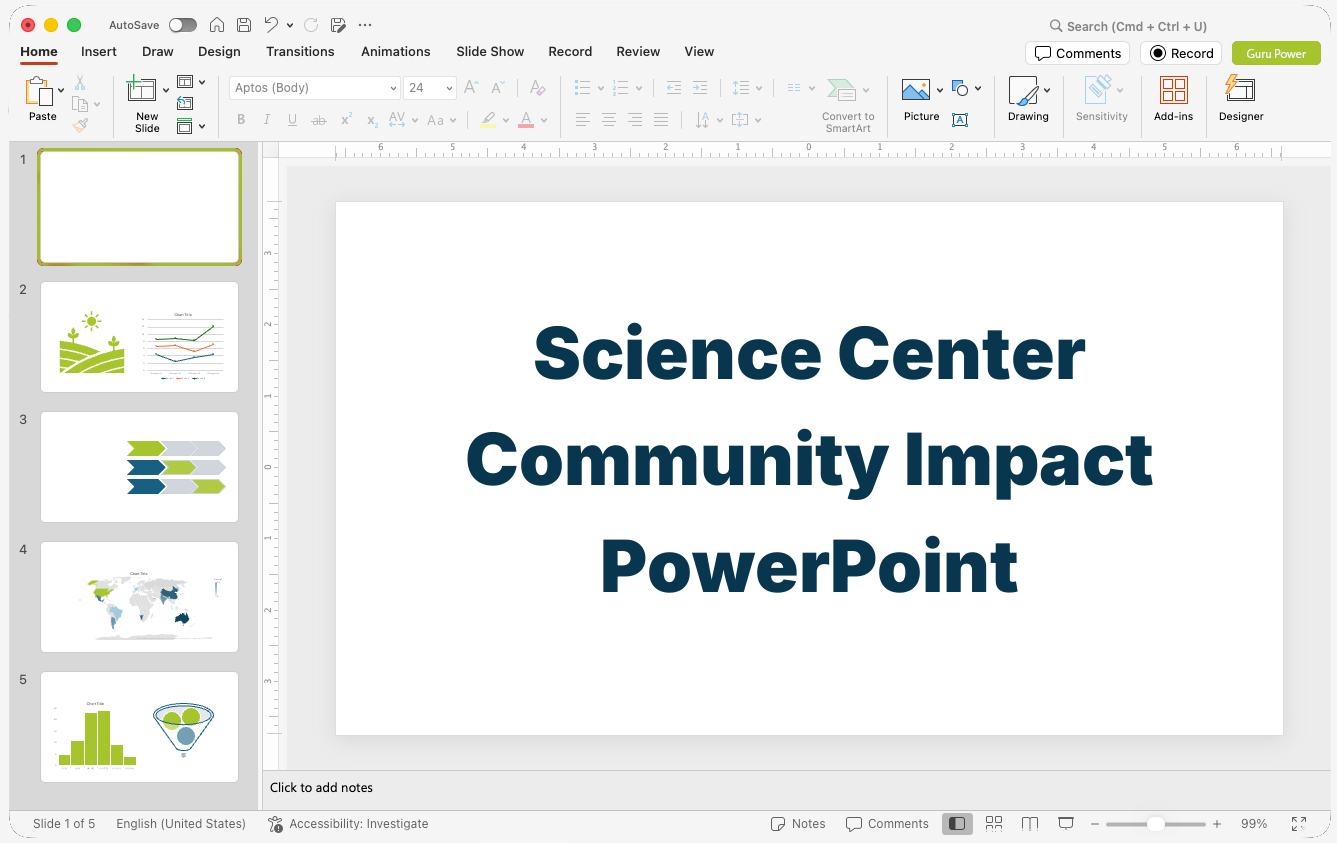
Science Center Community Impact PowerPoint
Primary Audience: Local business leaders, chamber of commerce members, and regional economic development boards..
Purpose: Demonstrate regional economic impact, tourism generation, and workforce development contributions..
Description: This Science Center impact PowerPoint formats economic multiplier studies, visitor spending data, and STEM career training statistics into executive summary slides. Infographics quantify non-local visitor draw and secondary expenditure in surrounding business districts. Visual layouts map corporate partnership initiatives to local workforce development pipelines. The presentation positions the institution as a core anchor of regional economic infrastructure.
Your PowerPoint, Google Slide and KeyNote Strategy, Story and Design Professionals
Presentation Gurus delivers end-to-end slide structure, visual storytelling, and institutional brand consistency across all digital materials. We analyze dense technical documentation, grant requirements, and strategic master plans to extract clear message hierarchies. Our team translates complex visitor demographics, budget allocations, and facility needs into precise data visualizations that maintain compliance with institutional standards. By standardizing presentation assets across your administration, development, and curatorial teams, we eliminate visual inconsistency and protect institutional credibility. Contact Presentation Gurus today to schedule a consultation with a presentation strategist and upgrade your organization's executive communication materials.
Ready ToGet Started?
Questions & Answers
Museums, Public Libraries & Cultural Institutions Presentations FAQs
We have sensitive business information. Can you work under an NDA?
Virtually all of our client work is done under an NDA. We have a basic NDA included with our presentation work order, plus an enhanced, expanded non-disclosure agreement available whenever a project calls for it.
Do you write the presentation content, or do we provide the materials?
We work directly with your existing documentation, including strategic plans, grant applications, architectural master plans, and financial reports. Our team acts as information architects, distilling dense technical copy into concise executive slide layouts, visual hierarchies, and clear data summaries tailored to specific target audiences.
Can you adapt existing brand guidelines from municipal or academic parent entities?
Yes. Cultural institutions frequently operate under overarching municipal, university, or state brand guidelines. We build slide deck master files that conform strictly to parent entity typography, color systems, and logo usage rules, while establishing custom chart styles and layout grids optimized specifically for complex data visualization and board reporting.
What does Museums, Public Libraries & Cultural Institutions Presentations presentation design cost?
Pricing is simple and clear. A basic slide design or redesign begins at $49 per slide. Premium presentation design, which includes copywriting and basic storytelling, starts at $79 per slide. Custom presentations involving strategy, copywriting and custom graphics are quoted based on your specifications. See complete pricing details here.
How does the collaboration process work?
Everything happens online. Every meeting is a Microsoft Teams call or similar virtual environment where we can share desktops and information in real time. Revision meetings and discovery calls are always scheduled in the morning, so by noon we can begin work on tasks for the next revision meeting.
How do you handle sensitive financial and governance data for cultural non-profits?
All data handling follows strict non-disclosure protocols. We work with redacted financial models, anonymized donor tiers, and non-public strategic plan drafts. Visual layouts are designed to present complex public library and museum budget structures, municipal matching grants, and endowment allocations accurately without exposing confidential operational details before official public release.
Does our industry need a Presentation or a Pitch Deck?
The terms are frequently used interchangeably, but they serve different strategic purposes. A pitch deck is a highly visual, persuasive tool designed to secure a strategic commitment or investment. A standard presentation is an informative, detailed document structured to align stakeholders and share data.
What is the typical turnaround time for a capital campaign pitch deck?
Standard executive presentation projects require ten to fifteen business days from initial content audit to final deliverable. This timeline allows for narrative structuring, custom visual asset creation, and two rounds of stakeholder review. Expedited schedules are available for urgent municipal budget hearings or grant submission deadlines.
How long does it take to get a presentation designed?
If your team needs a complete presentation by 9:00 AM the next day, we can meet that deadline. Most projects take 10 – 15 days, providing we have all the information. Pricing is also based on slide complexity and speed — a basic slide deck with a 15-day delivery costs much less than a premium slide deck delivered the next morning.
Will our team receive the fully editable source file?
Yes. Unlike graphic designers who deliver flat PDFs or JPEGs, Presentation Gurus delivers the native, fully editable presentation file (.pptx, .key, etc.) so your team can make last-minute text edits on the fly, or update the presentation later as details change.
Presentation Gurus' research identifies 14 locations with active Museums, Public Libraries & Cultural Institutions operations, including Washington, DC, New York, NY, and Chicago, IL.
Public institutions carry a unique responsibility to educate, inspire, and preserve history for the communities they serve. Along the East Coast, this work centers on historic archives, major research branches, and celebrated galleries. In Washington, DC, teams support the Smithsonian Institution, the National Archives, and the Library of Congress as they present complex findings to the public. Further north, Baltimore, MD houses the Enoch Pratt Free Library, the Walters Art Museum, and the Baltimore Museum of Art. Cultural collections run equally deep in Philadelphia, PA, home to the Philadelphia Museum of Art and the Free Library, as well as in New York, NY, where the Metropolitan Museum of Art and the New York Public Library manage vast public outreach. New England adds its own rich heritage in Boston, MA, where academic museums and the Boston Public Library translate centuries of regional knowledge into clear public programming.
Across the Midwest and South, cultural centers serve as vital community anchors. Cleveland, OH relies on the Cleveland Museum of Art and its historic main library branch, while Chicago, IL engages audiences through the Field Museum, the Art Institute of Chicago, and the expansive Chicago Public Library system. In Minneapolis, MN, strong regional foundation support powers initiatives at the Minneapolis Institute of Art and the Walker Art Center. Southern institutions reflect similar civic investment. A dedicated district in Houston, TX brings together nineteen cultural institutions alongside the Houston Public Library, while Atlanta, GA thrives around the High Museum of Art and the Atlanta History Center.
Western cultural facilities address both broad urban populations and vast natural history collections. In Denver, CO, curators and educators at the Denver Art Museum, the Denver Museum of Nature & Science, and the Denver Public Library share essential regional stories. On the West Coast, Seattle, WA maintains a strong Pacific Northwest presence through the Seattle Art Museum and the Seattle Public Library. Further south, San Francisco, CA brings civic collections forward through SFMOMA, the de Young Museum, and the San Francisco Public Library, while Los Angeles, CA reaches global arts audiences through LACMA, the Getty Center, and the Los Angeles Public Library system.
These facilities rarely operate in isolation. They routinely share ideas, research, and deck assets with teams in Higher Education Institutions (Universities & Colleges) and Scientific Research Institutes & National Labs to turn technical discoveries into accessible community exhibitions. Civic collections also work alongside Non-Profit Organizations (NPOs) & NGOs and Trade Associations & Industry Coalitions during major community initiatives and donor meetings. Education directors coordinate curriculum plans alongside K-12 School Districts & Private Schools, Vocational & Technical Training Centers, and Corporate Training & Executive Education programs. Even historical and archival collections find regular intersections with Defense & Military Organizations, making clean presentation design support indispensable across all their public and private briefings.